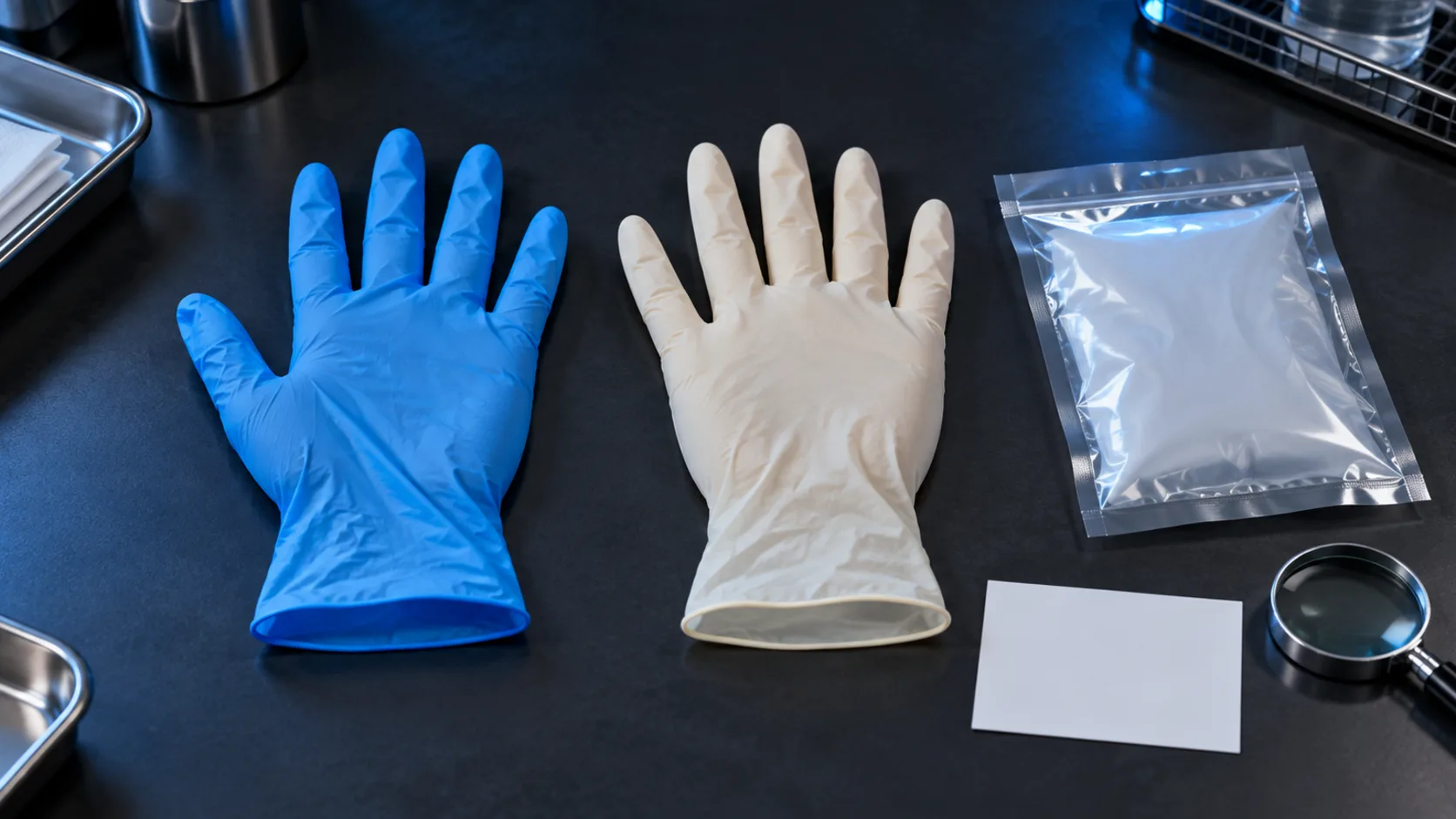
Cleanroom nitrile gloves: ISO class, contamination evidence and buyer specification
A practical guide to cleanroom glove selection, ISO 23464, room classification, particle and extractables evidence, sterility, ESD and packaging transfer.
Published by NewGlove
Reviewed and updated 21 September 2026

Sterile and cleanroom-suitable are different claims. ISO 23464 addresses nitrile cleanroom gloves for specified ISO classes, while sterile status needs its own validated process, routine-release and sterile-barrier evidence. Buyers should match the exact glove to the controlled environment using particle, chemical-contamination, packaging, sterility, ESD and protection evidence relevant to the process. ISO 14644-1 classifies room air rather than certifying the glove.
This guide helps pharmaceutical, biotechnology, electronics, laboratory and advanced-manufacturing buyers turn a room or process requirement into a glove specification. It does not claim that NewGlove currently has a cleanroom glove or cleanroom facility. It is general procurement information, not contamination-control, GMP, regulatory or safety advice.
Separate the claims before comparing products
Cleanroom compatible is often used beside several other terms. Treat each one as a separate specification field rather than assuming that one proves the others.
- Cleanroom suitability: contamination performance, processing and packaging matched to the controlled environment.
- Sterile: validated sterilisation, routine release and sterile-barrier evidence.
- Medical device: intended purpose, classification, conformity and market registration.
- Chemical protection: permeation, penetration and degradation evidence for the exact chemicals and use conditions.
- ESD-safe or static-dissipative: electrical performance evidence using the specified method and conditions.
- Food contact or other application status: a separate declaration and market-specific scope.
What ISO 23464:2020 tells buyers
ISO 23464:2020 is titled Nitrile cleanroom gloves - Specification. ISO describes it as applying to cleanroom gloves made from acrylonitrile-butadiene material for ISO Class 4, ISO Class 5 and ISO Class 6. The standard was reviewed and confirmed in 2025, so the 2020 edition remains current at the time of this review.
A catalogue reference to ISO 23464 is still only a claim until the supplier provides exact-product evidence. Ask for the product reference, lot, laboratory, test method, result, acceptance limit and report date. Confirm that the tested glove has the same formulation, washing, drying, packing and sterile status as the product offered.
ISO 14644-1 classifies the room, not the glove
ISO 14644-1:2015 classifies air cleanliness by airborne particle concentration in cleanrooms and clean zones. ISO currently shows the standard as under systematic review, so check its status and edition again before writing a long-term specification or contract.
A room classified to ISO Class 5 does not automatically make every item made, washed or packed there suitable for an ISO Class 5 process. The glove can introduce particles, chemical residues or viable contamination, and its packaging can compromise transfer. Room records and glove test evidence answer different questions.
Write the process risk before the glove specification
Pharmaceutical aseptic processing, semiconductor fabrication, battery manufacture and analytical laboratories can use similar-looking gloves for very different reasons. Start with what must be protected, what contamination can cause harm and where in the process the glove enters.
- Industry and process step, including whether product or operator protection is primary.
- Room classification or GMP grade and whether the glove enters through an airlock, pass-through or isolator route.
- Critical particle sizes, ionic species, non-volatile residue, extractables or viable contamination concerns.
- Sterile status, endotoxin or bioburden limits only where the process requires them.
- Chemical exposures, contact duration and temperature requiring a separate protection review.
- ESD or static-control requirements for sensitive electronic processes.
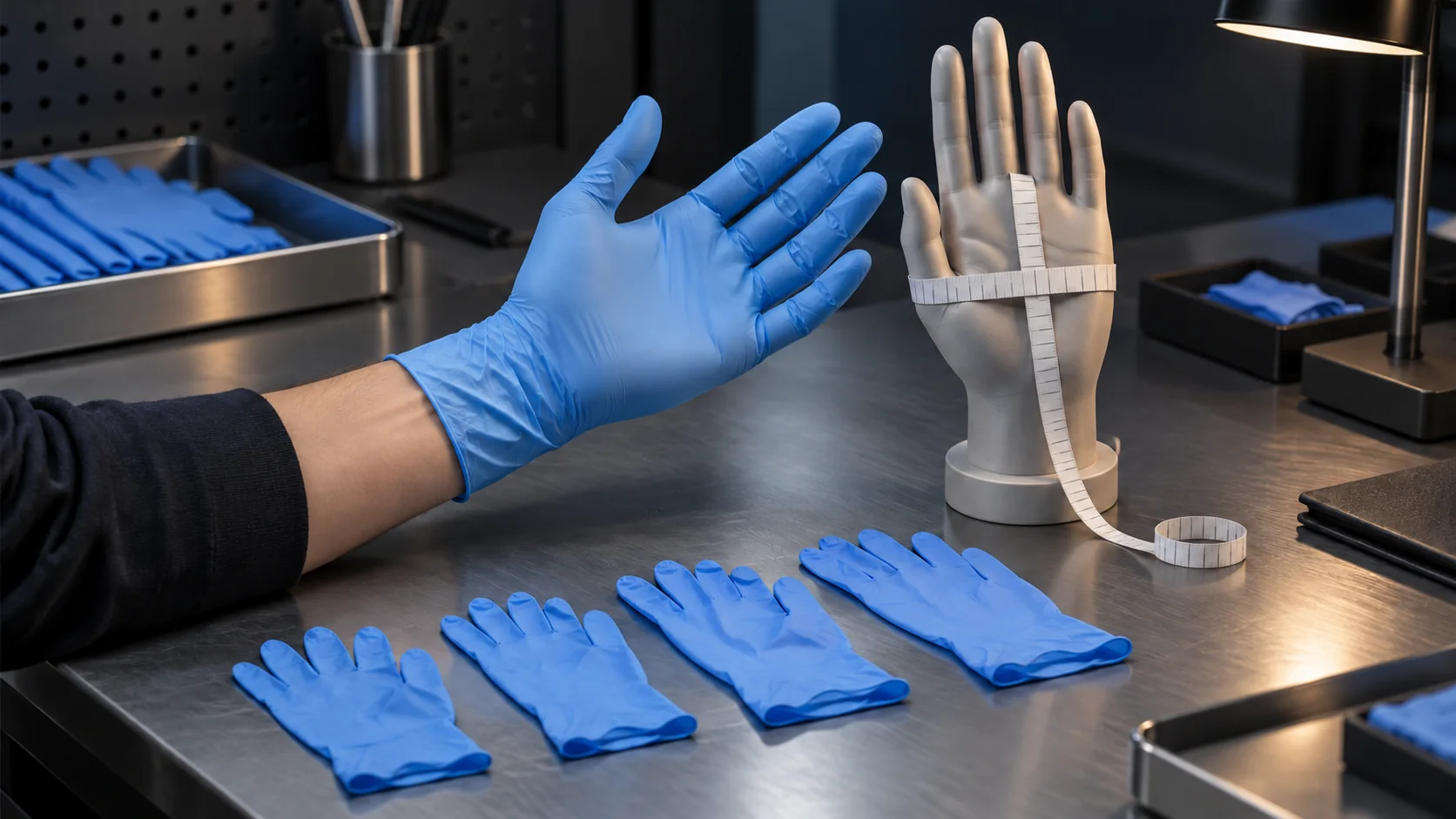
- Cuff length, overlap with garments, hand-specific or ambidextrous design and change frequency.
Read particle and extractables reports precisely
A result is useful only when the method and units can be compared with the buyer’s limit. For surface particles, record the threshold size, extraction or sampling method, units, sampled area or glove count, wash state, lot and acceptance limit. Do not compare two headline numbers until those details match.
Chemical contamination can be reported through ionic extractables, non-volatile residue, total organic carbon or application-specific methods. These measures are not interchangeable. Specify the ions or residues that matter to the process, then ask for the exact method, detection limits and product-lot scope. If no approved limit exists, the buyer’s technical team should establish one based on process risk and validation.
Sterility, endotoxin and bioburden are different
Sterile status does not give a numerical endotoxin limit, and an endotoxin result does not prove sterility. Bioburden describes viable microorganisms present before sterilisation or at another defined point, while sterility is supported through a validated process and controlled release. Request only the evidence that the process requires, but keep the terms separate.
For a sterile glove, review the sterilisation method, validated cycle, routine release controls, sterile-barrier system, ageing and transport evidence. Match every document to the glove reference, sizes, packaging configuration, sterilisation site and validity period.
Packaging is part of contamination control
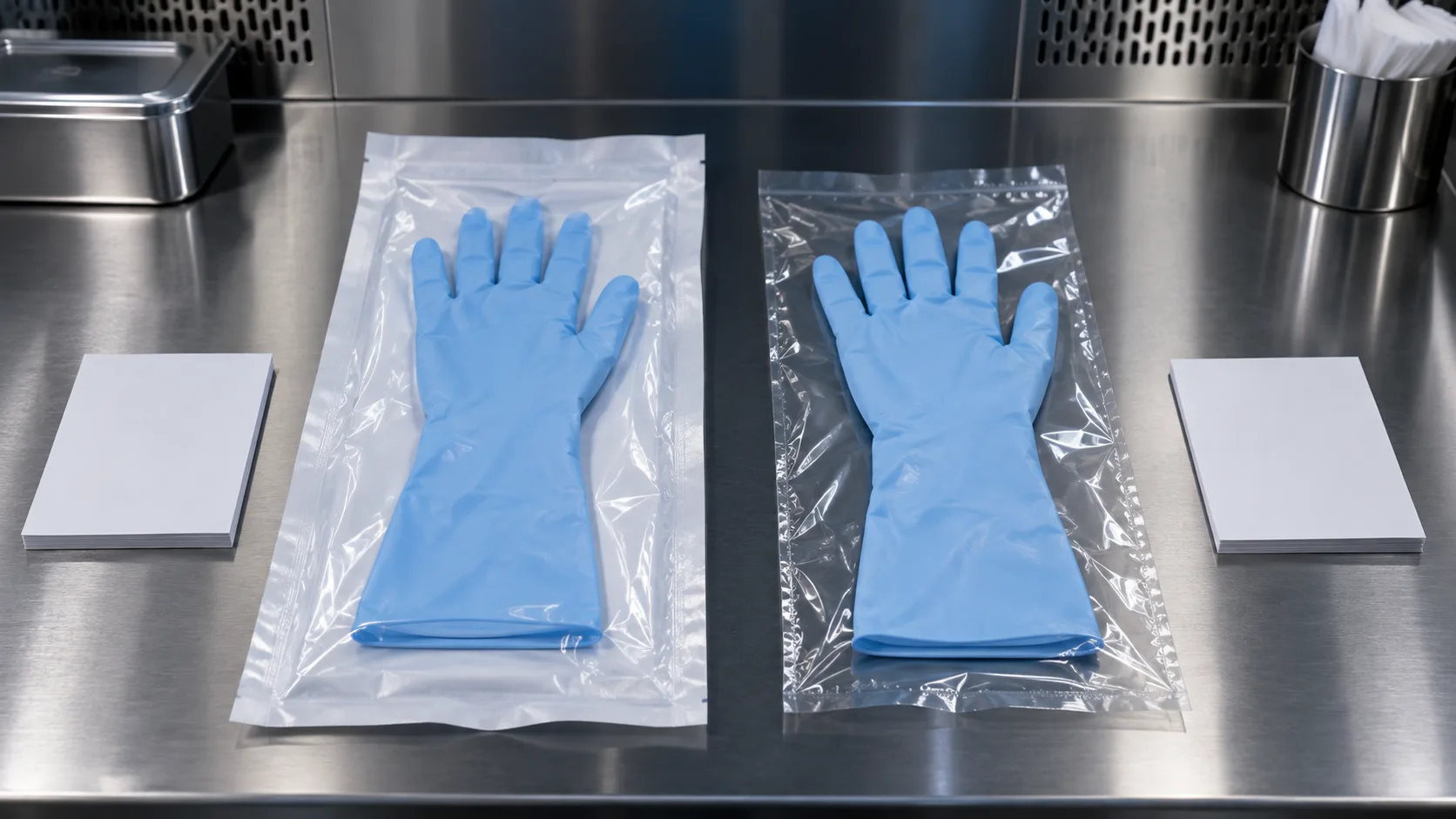
A clean glove can be compromised by the route used to move it into a higher-grade space. Define the number of bags, bag materials, seal type, carton exclusion, labelling and the sequence for removing each layer. Confirm which surfaces have been exposed at each transfer stage and how the process is validated.
EU GMP Annex 1 identifies transfer of materials into Grade A and B areas as a significant contamination risk and requires controlled, validated routes. It also requires appropriate sterilised, non-powdered rubber or plastic gloves for Grade A and B gowning. Those GMP requirements do not certify a glove for every pharmaceutical operation. The site’s contamination-control strategy and process validation still decide the exact specification.
- Primary glove pack and number of protective bag layers.
- Bag cleanliness, seal integrity and product orientation for aseptic opening where relevant.
- Transfer and disinfection sequence for each room grade or isolator.
- Lot, expiry and product identifiers readable without compromising the clean barrier.
- Storage, transport and carton controls before the pack reaches the clean area.
GMP monitoring does not replace incoming qualification
Annex 1 calls for personnel monitoring in Grade A and B areas, including glove sampling after critical interventions and on exit from Grade B. This operational monitoring helps show whether the controlled process remains effective. It does not remove the need to qualify the glove, packaging and transfer route before use.
Connect deviations to product lot and process records. If monitoring trends worsen after a glove, wash process or pack change, the investigation should be able to identify the affected product and compare the approved specification with the delivered lot.
Exact-product cleanroom evidence checklist
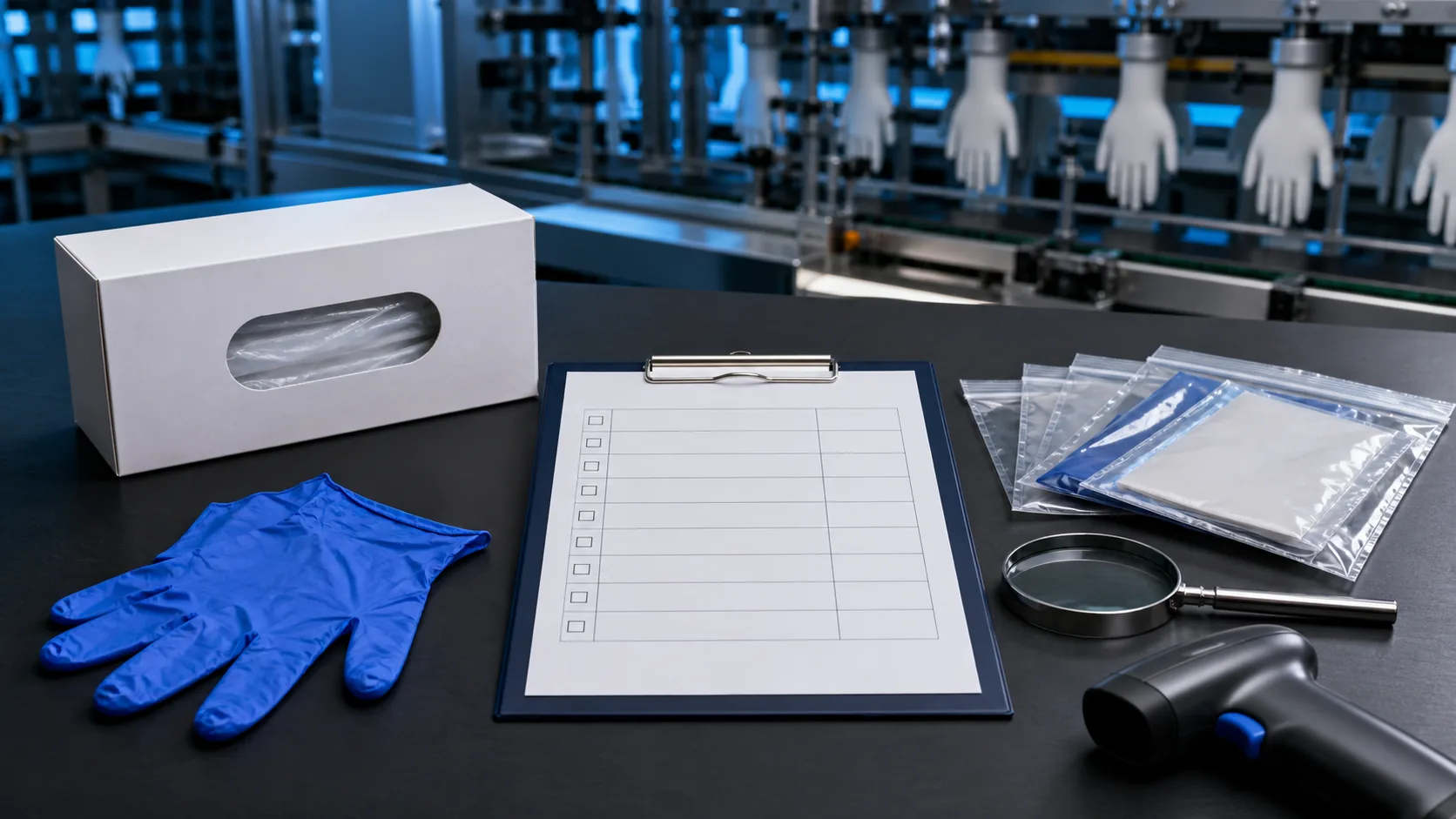
Use a matrix that states the buyer requirement, test method, acceptance limit, evidence reference and exact SKU scope. Missing mandatory evidence should remain a blocker, not a conditional approval hidden in meeting notes.
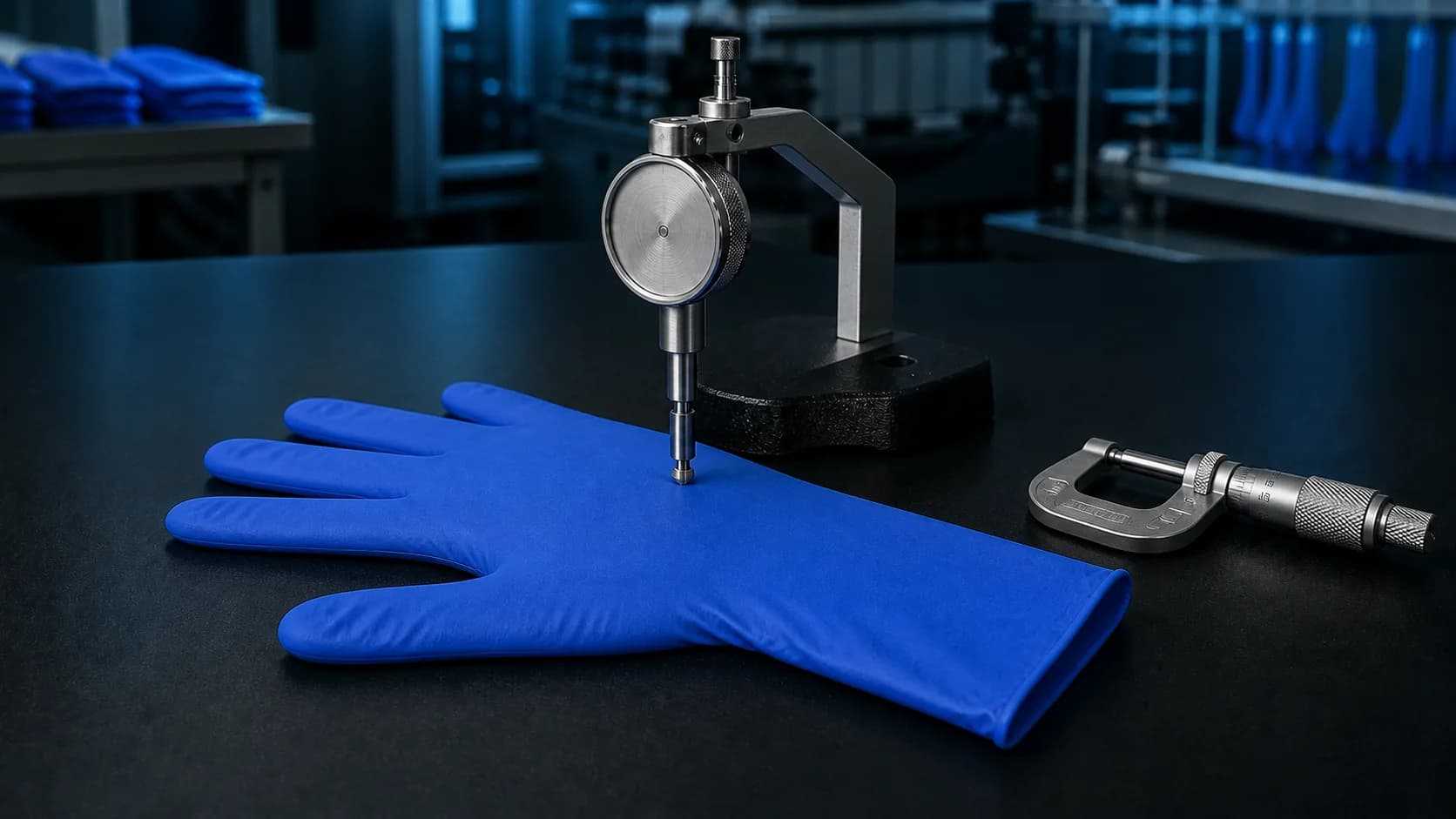
- Exact product specification, formulation, sizes, cuff length, design, sterile status and pack configuration.
- ISO 23464:2020 or other named cleanroom specification report where claimed, tied to the exact SKU and lot.
- Surface particle results with threshold, units, method, sampled area, wash state and acceptance limit.
- Ionic extractables, non-volatile residue, total organic carbon or other chemical results only where required and clearly defined.
- Endotoxin, bioburden and sterile evidence kept separate and supplied only where claimed or required.
- Washing, drying and packing-site classification, monitoring and current facility scope.
- Bag materials, transfer sequence, bag cleanliness, seal integrity and carton exclusion controls.
- ESD, chemical-protection, medical-device or other evidence as separate exact-product claims.
- Change control connecting formulation, wash, packing, sterilisation and test evidence to released lots.
Build a sourcing brief without assuming availability
NewGlove can discuss sourcing programmes through its contract manufacturing relationship in Malaysia. No cleanroom product or facility claim is made. A programme should not move beyond initial scoping until the exact product and facility evidence meet the buyer’s requirements.
Send the industry, room class or GMP grade, sterile status, particle and ionic limits, cuff length, packaging route, ESD needs, chemical exposure, destination and estimated volume. That information allows potential products to be screened against a written evidence gate rather than a generic cleanroom label.