How nitrile gloves are made: dipping, curing and quality control
Follow the typical nitrile glove process from compound and ceramic formers through coagulant dipping, leaching, curing, finishing, inspection and traceable packing.
Published by NewGlove
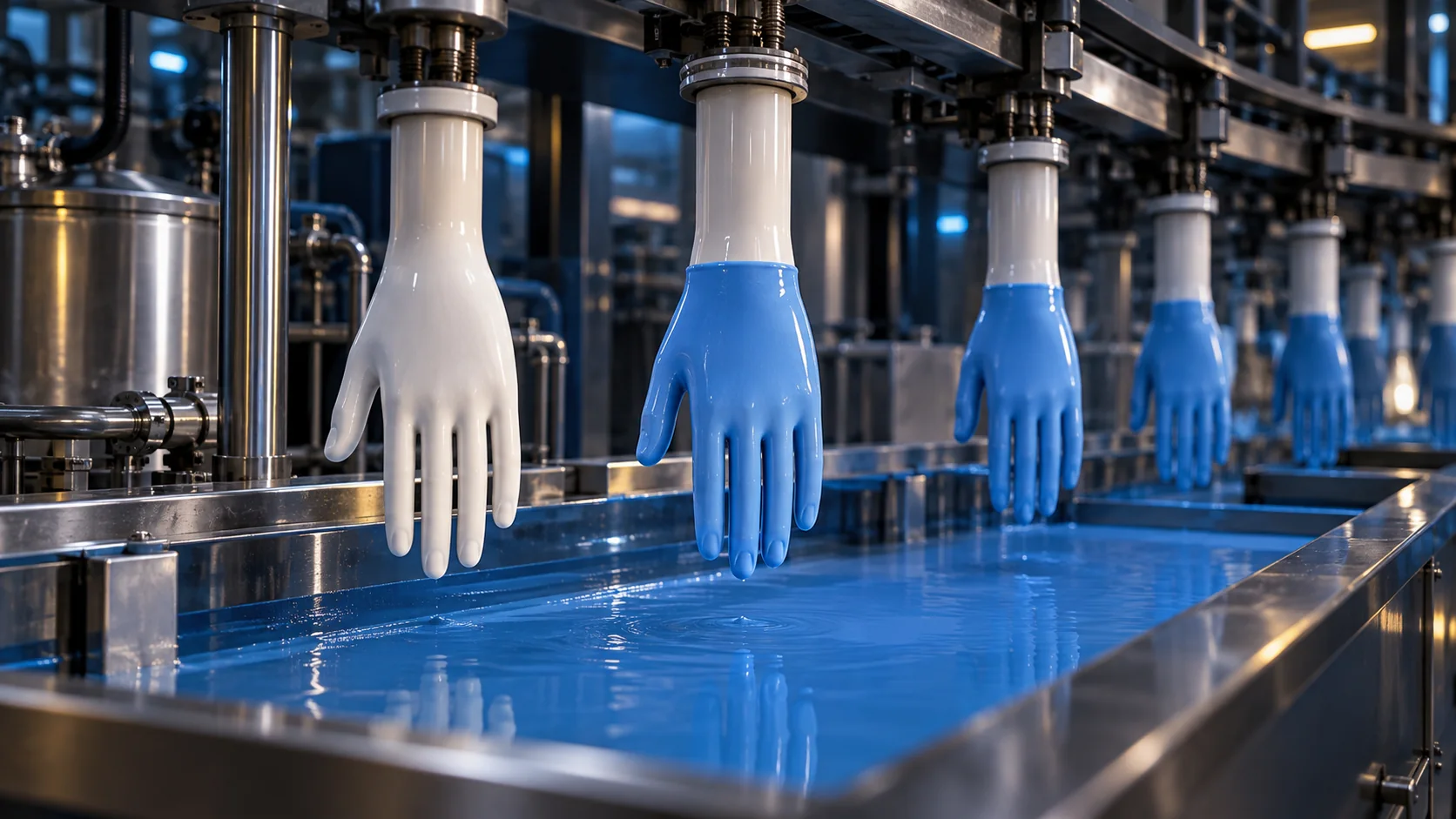
A nitrile glove is not cut from a sheet or sewn to shape. Thin disposable nitrile gloves are typically formed as a film on hand-shaped formers using a controlled coagulant-dipping process. The line then washes, cures, finishes, strips, inspects and packs the product against a defined specification.
The sequence may look simple, but formulation, former condition, bath control, dwell time, temperature, leaching, cure, surface treatment and handling can all affect the finished glove. This article explains the typical process so buyers can ask better questions. It does not describe every factory, formulation or product, and it does not establish that a glove is suitable for a particular medical, protective, chemical or food-contact use.
1. Translate the buyer brief into a controlled formulation
Production begins before the dipping line. The manufacturer needs an approved product specification that defines the intended product, dimensions, mass or thickness targets, colour, finish, powder status, texture, cuff, sizes, pack format, test requirements and destination-market evidence.
Nitrile compound is not one universal recipe. Polymer dispersion, pigments, stabilising ingredients, curing system and other additives are selected and controlled for the intended formulation. A claim such as accelerator-free, biodegradable or low-residue requires its own exact-product definition and supporting evidence. It cannot be inferred from blue colour or nitrile material.
2. Clean and prepare the hand-shaped formers
The production line carries hand-shaped ceramic or similarly suitable formers through cleaning and rinsing stages. Residue, damage or contamination on a former can transfer into the wet film or affect how the compound deposits.
Former shape also matters. It contributes to finger length, palm shape, thumb position and the dimensions experienced by the wearer. That is one reason two products with the same nominal size can fit differently.
- Cleaning method, concentration, temperature and rinse control.
- Inspection for chips, surface damage and contamination.
- Former identity and geometry for the approved size range.
- Line clearance when products, colours or formulations change.
3. Apply coagulant, then dip into nitrile compound
In coagulant dipping, the clean former first receives a controlled coagulant layer and is dried. It then enters the nitrile latex bath. Peer-reviewed work from the University of Cambridge describes electrolyte ions moving from the coagulant-coated former into the nitrile compound, causing a wet gel deposit to build on the former.
Bath condition, former movement, dwell time, withdrawal and compound properties influence how the film forms. The process is therefore controlled as a system rather than reduced to one dip time. A second or different dip may be used in some product designs, but buyers should not assume that every glove follows the same route.
4. Form the cuff and control the wet film
The cuff bead is typically formed by rolling the film near the open end while it remains on the former. The bead can help reinforce the edge and support donning, but its dimensions and consistency still need specification control.
At this stage, the film can be vulnerable to runs, thin areas, contamination or uneven deposition. In-process checks should be linked to action limits and a defined response rather than treated as observations with no release consequence.
5. Leach and wash the film
Water washing or leaching removes soluble constituents from the film. The result depends on the product and process, including water quality, temperature, time and the point at which washing occurs.
Leaching is not a universal guarantee that a finished glove contains no residual chemicals or cannot cause a skin response. Where residuals, extractables, biological evaluation or a special formulation claim matter, request the exact-product method, result and scope rather than relying on the process name.
6. Cure the nitrile film
The coated former passes through controlled heating so the nitrile film develops its finished physical properties. Cure time and temperature are formulation-specific process parameters. Under-cure, over-cure or uneven heating can affect strength, elongation, tack, colour and ageing behaviour.
Buyers do not need the supplier's confidential recipe to verify control. They can ask how critical parameters are monitored, what triggers quarantine and how finished physical testing connects to a production lot.
7. Finish the surface for donning
Powder-free products need a controlled surface that can be donned and released from the former without depending on loose donning powder. Depending on the product, manufacturers may use chlorination, a polymer coating or another validated finishing route.
Powder-free, chlorinated and polymer-coated are different statements. None proves medical status, sterility, chemical resistance, food-contact suitability or the absence of every potential sensitiser. Keep each claim tied to the exact specification and test evidence.
8. Strip, inspect and test the glove
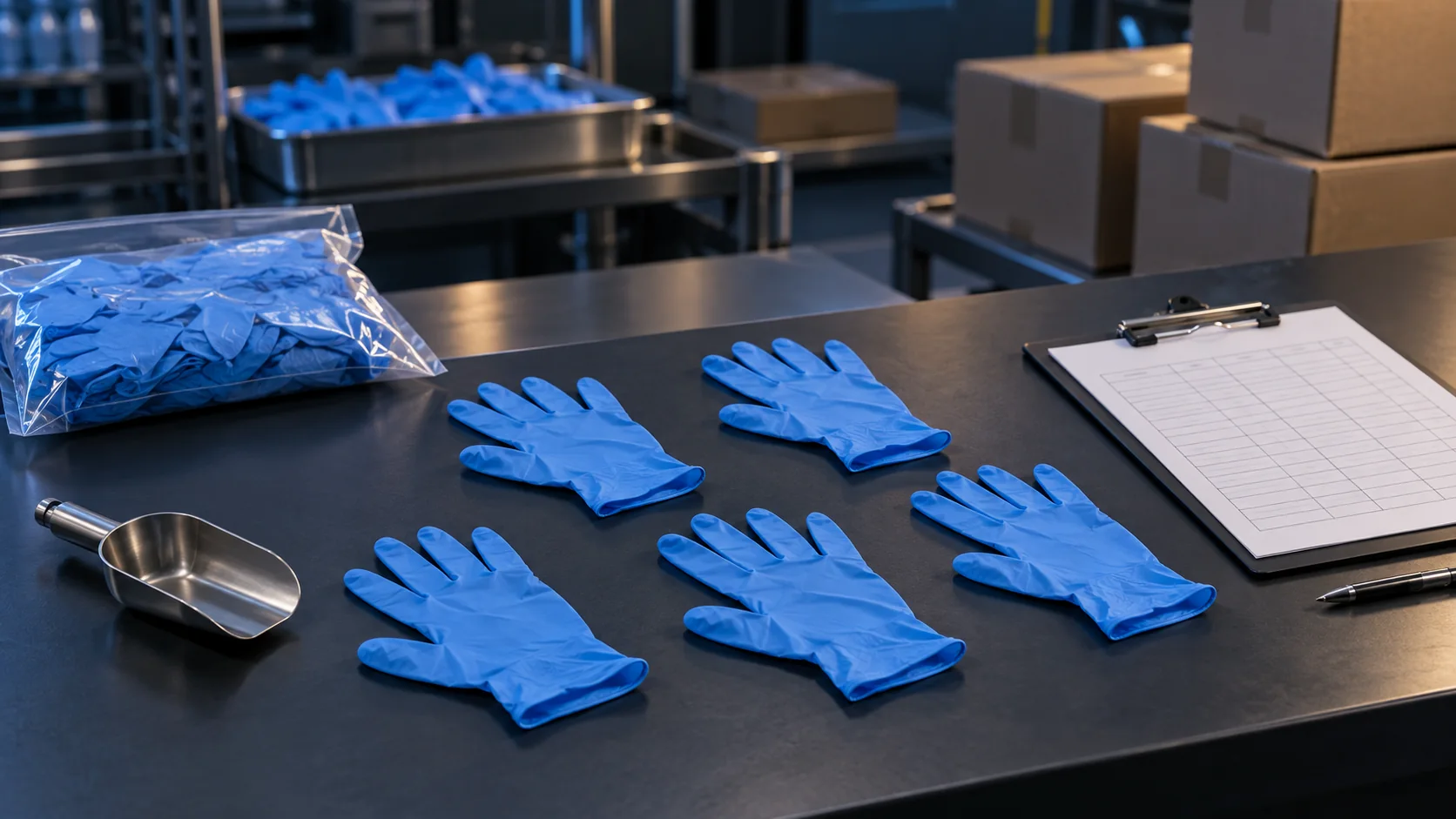
After finishing, the glove is removed from the former and handled under controls intended to preserve product identity and condition. Inspection can include visual defects, dimensions, physical properties, freedom from holes and packaging criteria as applicable to the exact product.
Acceptance sampling supports a lot decision; it is not the same as inspecting every glove and does not make an accepted lot defect-free. The approved plan should name the sampling standard and edition, lot definition, inspection level, defect classes, acceptance rules and release authority.
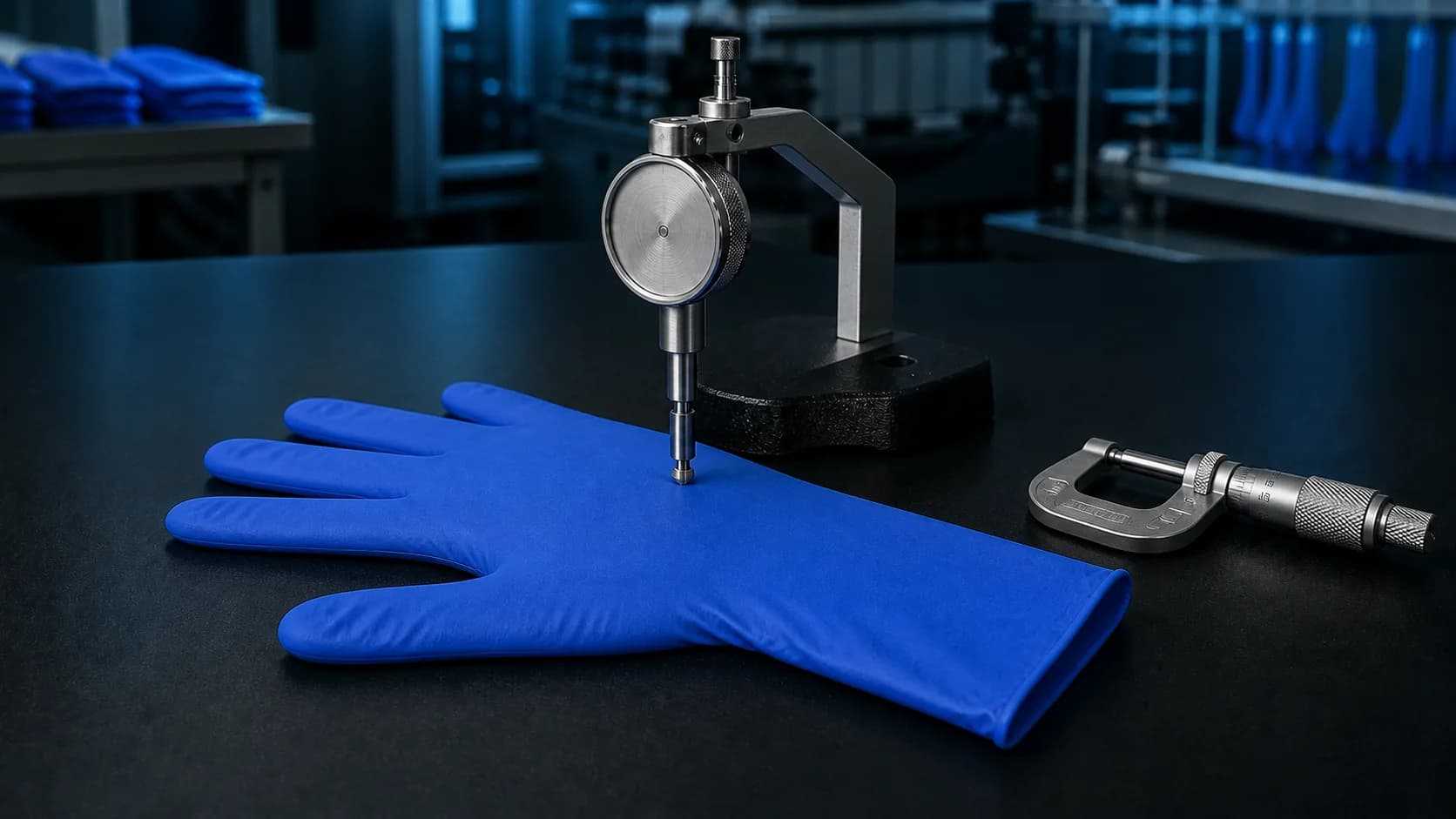
- Dimensions, mass or thickness at stated points and tolerances.
- Tensile and elongation properties where applicable.
- Freedom from holes or leakage using the applicable method.
- Visual criteria for tears, thin areas, stains, tack, cuff and finish.
- Product identity, colour, size, count and pack integrity.
- Lot code, date information and document traceability.
9. Pack and release the correct product
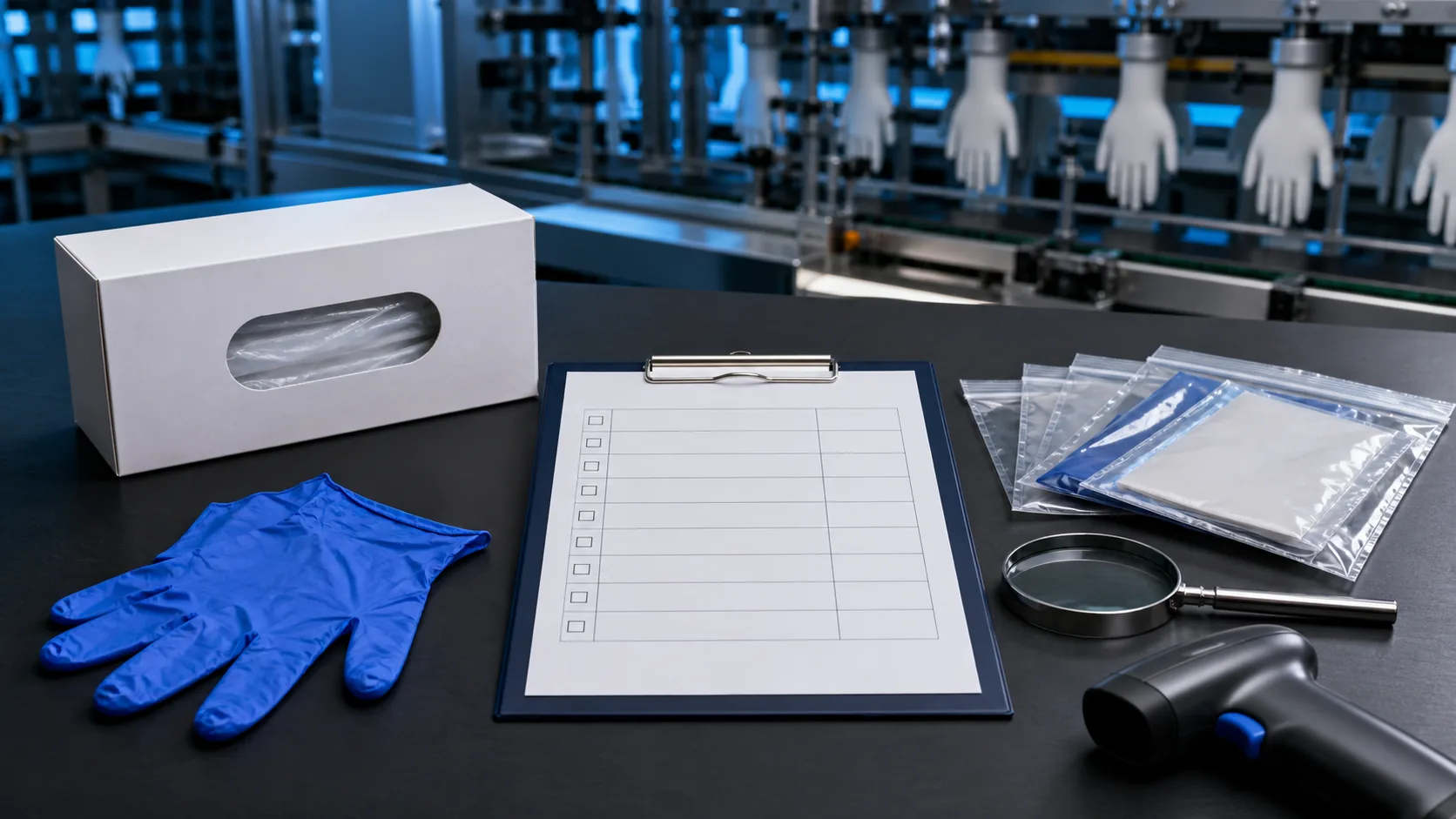
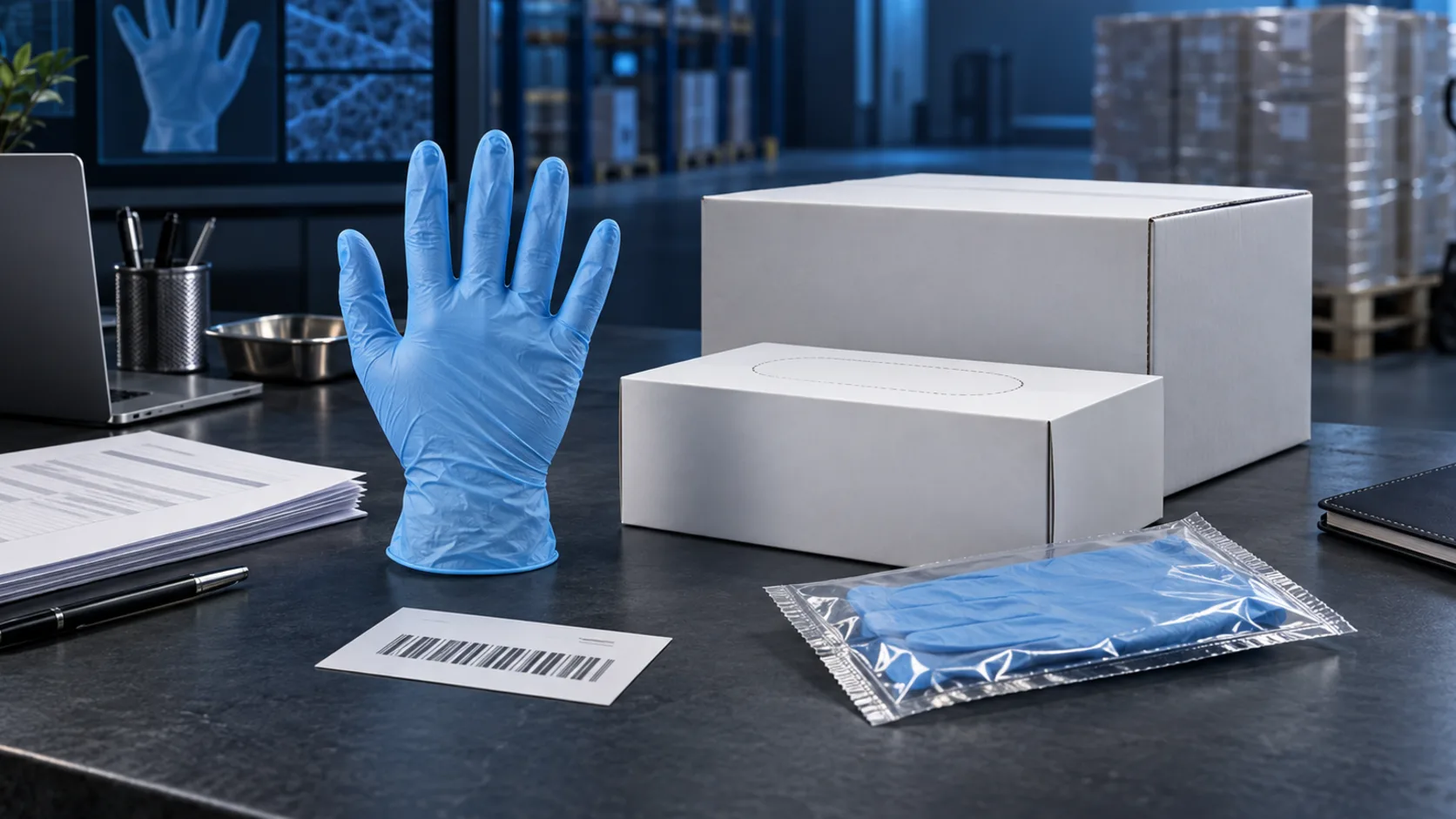
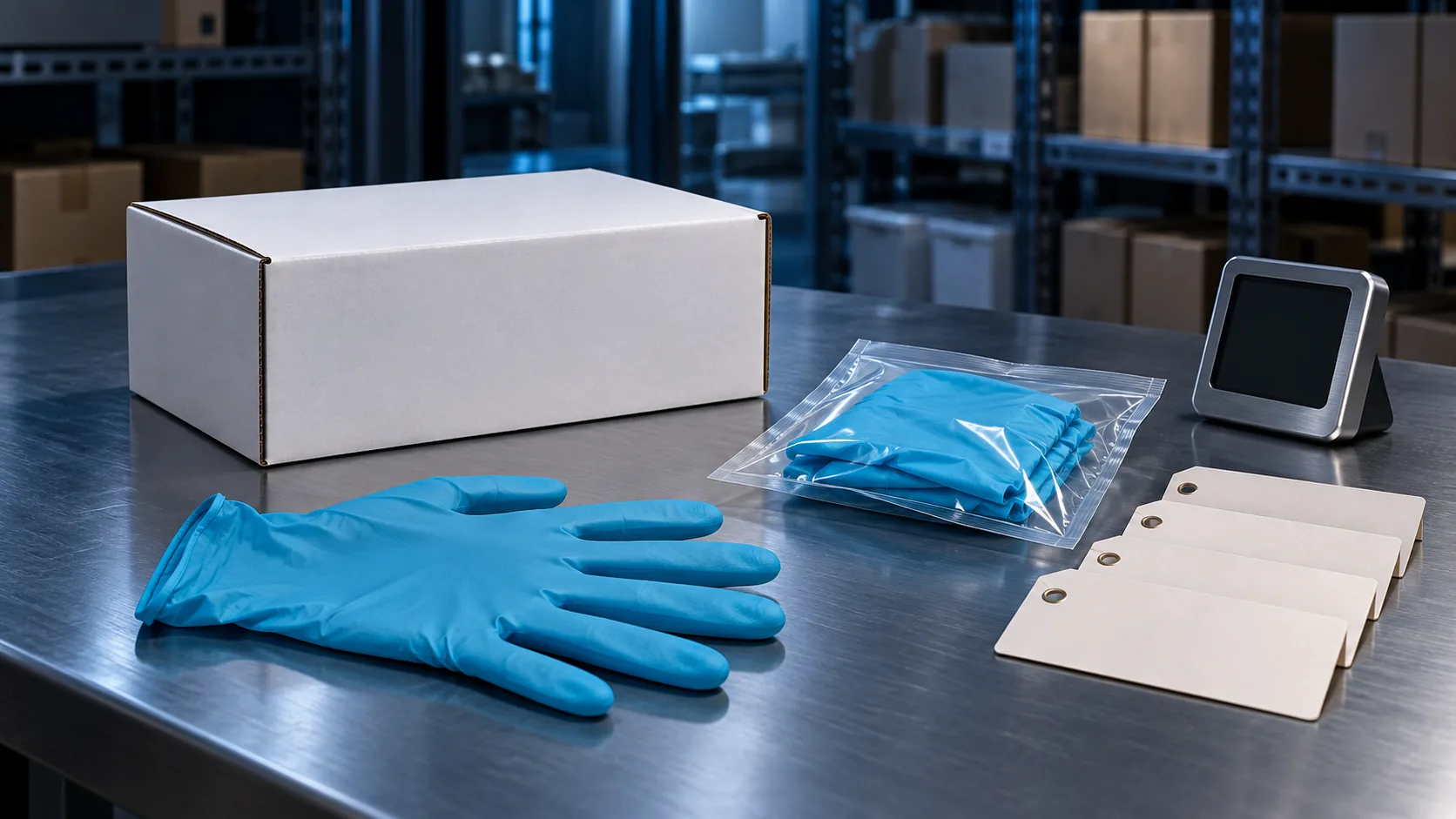
Packaging is part of product control. The inner dispenser, case and any transport packaging must match the approved product, size, count and artwork. Line clearance and reconciliation help prevent a conforming glove from entering the wrong box.
The release file should connect incoming materials, compound batch, line and process records, in-process checks, finished testing, packaging revision and released lot. For a regulated product, the legal manufacturer and other responsible roles must also be confirmed for the destination market.
What quality systems add to the production sequence
A clean line and a passing sample are not the whole quality system. Supplier controls, equipment maintenance, training, change control, nonconformity handling, corrective action, complaints and traceability all affect repeatability.
For US medical devices, FDA's Quality Management System Regulation became effective on 2 February 2026 and incorporates ISO 13485:2016 by reference. That requirement applies within its stated regulatory scope. It should not be turned into a generic claim that every glove or factory is FDA approved.
Buyer questions for a nitrile glove manufacturing review
Use the factory discussion to connect the commercial brief to controlled evidence. The aim is not to collect a generic process presentation, but to understand how the exact product is defined, made, checked and released.
- Which legal entity manufactures the exact product, and at which approved site and line?
- How are formulation, colour, former set, size range and packaging revision controlled?
- Which process parameters are critical, and how are excursions quarantined and investigated?
- What leaching, curing and surface-finishing route applies to this SKU?
- Which in-process and finished tests apply, under which current methods and editions?
- How is the sampling plan defined, and how are failed lots handled?
- How do carton codes trace to compound, production, test and release records?
- What change-notification and buyer-approval rules apply before repeat production?
From process tour to procurement decision
A production-line tour can show capability, but approval belongs to the exact glove and programme. Match what you observe to the approved specification, records, current evidence, responsible parties and destination market.
NEW GLOVE LTD develops OEM and private-label glove programmes with physical production under contract in Malaysia. Programme scope, product status, supporting documents, commercial minimums and timing are confirmed for the exact specification rather than inferred from a general manufacturing process.