Nitrile vs latex vs vinyl gloves: how to choose
A buyer-focused comparison of disposable glove materials, the evidence each task needs, and the questions to answer before approving a product.
Published by NewGlove
Reviewed and updated 23 August 2026
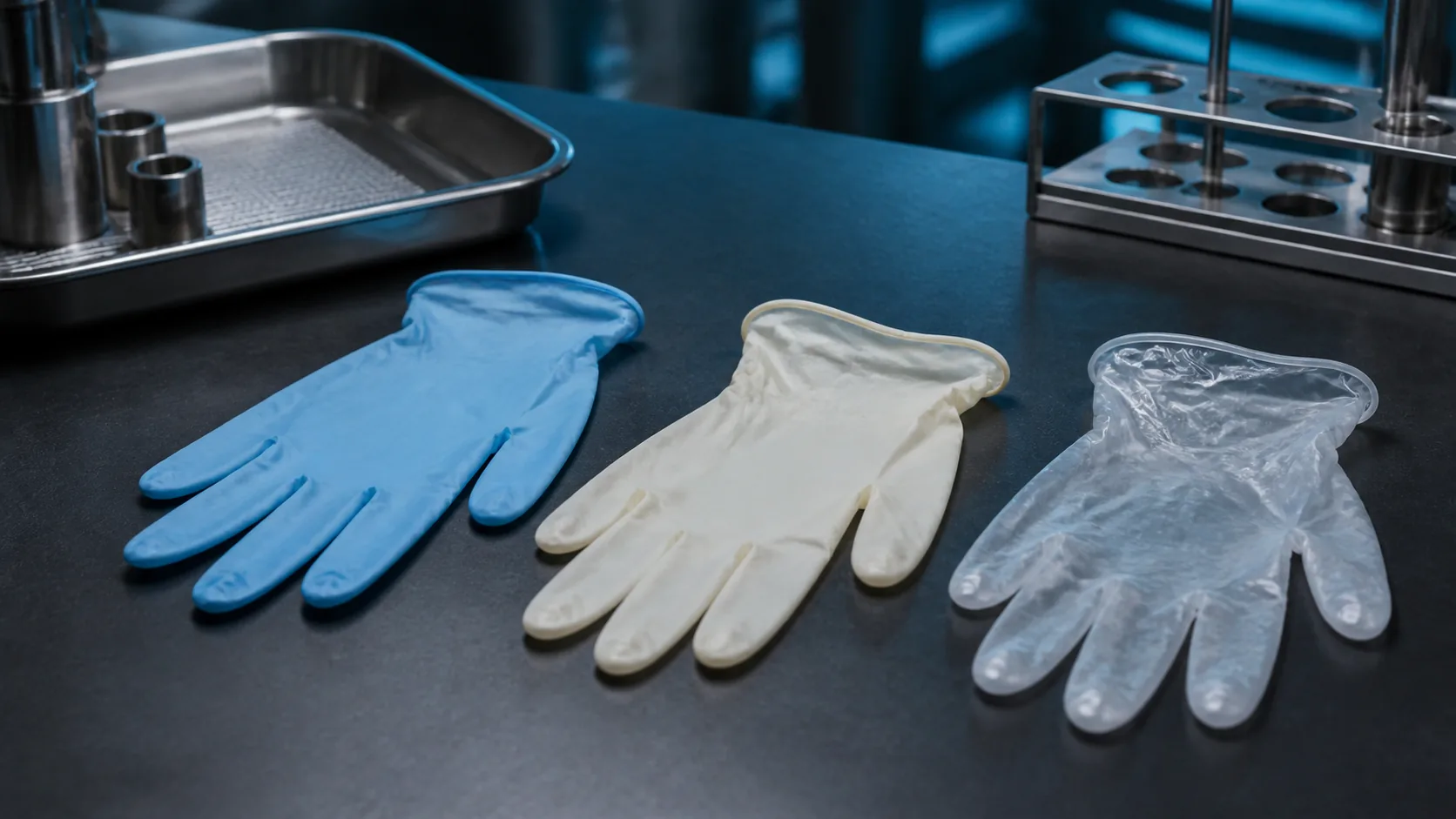
There is no universal winner in a nitrile-versus-latex-versus-vinyl comparison. A material name describes part of a glove, not its complete specification. Formulation, thickness, finish, fit, intended use, test evidence and quality controls can all change how two gloves made from the same broad material behave.
For procurement teams, the safest sequence is to define the task and hazards first, remove products that lack the required regulatory or test evidence, and only then compare material, user experience and cost. This guide is a selection framework, not medical, regulatory or safety advice; the workplace risk assessment and current documents for the exact SKU remain decisive.
The short comparison
Each material can be appropriate in the right specification. These are useful screening characteristics, not performance guarantees.
- Nitrile - a synthetic-rubber option that does not contain natural rubber latex. It is available in medical, protective and other product specifications, but chemical and barrier performance must be checked against the exact glove.
- Latex - natural rubber latex can offer a close, elastic fit, but its proteins can cause sensitisation or allergic reactions. HSE advises choosing non-latex gloves where suitable alternatives provide the protection needed; when single-use latex is selected, it should be low-protein and powder-free.
- Vinyl - a PVC-based, latex-free option often considered for selected shorter or lower-risk tasks. Fit, durability, food-contact status and barrier evidence are product- and task-specific, so vinyl should not be treated as an automatic substitute for a medical or chemical-protective glove.
Start with what the glove has to protect
Write down whether the glove is intended to protect the wearer, a patient, food, a manufactured product, or more than one of those. Then identify the substances and hazards involved, the type and duration of contact, required dexterity, allergy considerations, change frequency and destination market.
That distinction matters because medical-device, PPE and food-contact requirements answer different questions. A glove may carry more than one status, but one claim does not prove another. For example, a medical examination specification does not by itself establish suitability for a particular chemical, and a food-contact declaration does not establish medical use.
- Application and people or products being protected.
- Known chemicals, mixtures, biological exposure and physical hazards.
- Splash, intermittent contact or immersion, plus expected wear time.
- Applicable medical, PPE, food-contact or customer-specific requirements.
- Sizes, texture, cuff, colour-control needs and workplace allergy policy.
When nitrile belongs on the shortlist
Nitrile is widely specified where buyers need a glove without natural rubber latex, a close fit, or a product range spanning examination and industrial uses. Those broad characteristics do not make every nitrile glove interchangeable. A lightweight examination glove and a thicker textured industrial glove can have different intended uses, standards and chemical results.
For chemicals, use the manufacturer’s data for the exact formulation and substance. HSE notes that performance can vary between manufacturers and that data for pure chemicals may not predict a mixture. Check permeation, penetration and degradation information where those hazards are relevant, rather than assuming that the word “nitrile” is enough.
NewGlove lists powder-free, latex-free nitrile options across its examination and industrial categories. The correct next step is to compare the current documents for a candidate SKU with the written task assessment, not to select by colour or material alone.
When latex is being considered
Natural rubber latex can provide elasticity and close fit, which may support dexterity for some users and tasks. The material also brings a specific protein-allergy risk that needs to be addressed in the workplace assessment, including possible exposure of colleagues, patients or other people nearby.
HSE recommends selecting non-latex gloves unless alternatives cannot provide the protection needed. If a risk assessment supports single-use latex, HSE advises low-protein, powder-free products. Anyone with an existing natural-rubber-latex allergy should follow professional and workplace guidance rather than trialling a latex product.
NewGlove’s published NewPro-100 specification describes a powder-free glove that contains natural rubber latex. Buyers should request the current product file and confirm the intended application and local policy before approval.
When vinyl may be appropriate
Vinyl gloves can be considered for selected short-duration tasks where the required fit, dexterity and barrier evidence are met. UK adult-social-care guidance, for example, distinguishes between duties for which vinyl may offer sufficient protection and tasks involving longer wear, tearing risk or greater dexterity where an alternative such as nitrile should be considered.
Do not extend that example to every workplace. A laboratory, food-processing line and care setting can have very different hazards. For food handling, request a declaration or other evidence for the exact glove, food type and destination market; “vinyl” and “food safe” are not interchangeable labels.
NewGlove publishes both general vinyl and vinyl examination products. Their stated standards differ, which illustrates why approval must happen at SKU level rather than material level.
Use a task-to-evidence matrix
A short matrix keeps preference and price from outrunning the evidence. Create one row for each task and only compare products that clear every mandatory field.
- Task and contact scenario - what is handled, for how long, and under which conditions?
- Required status - medical device, PPE, food contact or another controlled specification?
- Evidence - declaration, current test reports, instructions, chemical data and limitations for the exact SKU?
- Wearer factors - sizes, fit, dexterity, skin history and latex policy?
- Operational factors - donning, grip, change triggers, box count, traceability and storage?
- Commercial factors - delivered cost, expected consumption, waste route and acceptable remaining shelf life?
Trial the shortlisted glove, not just the material
A controlled user trial should compare approved candidates in the actual task. Record fit by size, grip, dexterity, tearing or snagging, donning, comfort over the intended wear period, and the reasons gloves are changed. Stop the trial if the glove’s documented scope does not cover the hazard.
Use the results to estimate cost per completed task, not simply price per glove. A cheaper unit can cost more if poor fit drives extra changes, while choosing unnecessary thickness can add material without improving the defined outcome. The trial cannot replace regulatory or chemical evidence; it tests usability after those gates have been passed.
Documents to request before approval
The final choice should leave a reviewable product file, not just a catalogue comparison.
- Current product specification, intended use and instructions for use.
- Declaration of conformity and relevant registration or responsible-party details for the destination market.
- Applicable medical, PPE or food-contact reports and the product references they cover.
- Chemical permeation, penetration and degradation data for the exact substances and glove where required.
- Lot coding, shelf life, storage conditions and complaint or change-control process.
- Confirmation that samples and delivered stock use the same approved formulation and specification revision.