Nitrile gloves for tattoo and piercing studios: what UK buyers should check
Choose studio gloves by task, blood and body-fluid exposure, chemicals, fit, change points and exact-product evidence, not colour alone.
Published by NewGlove
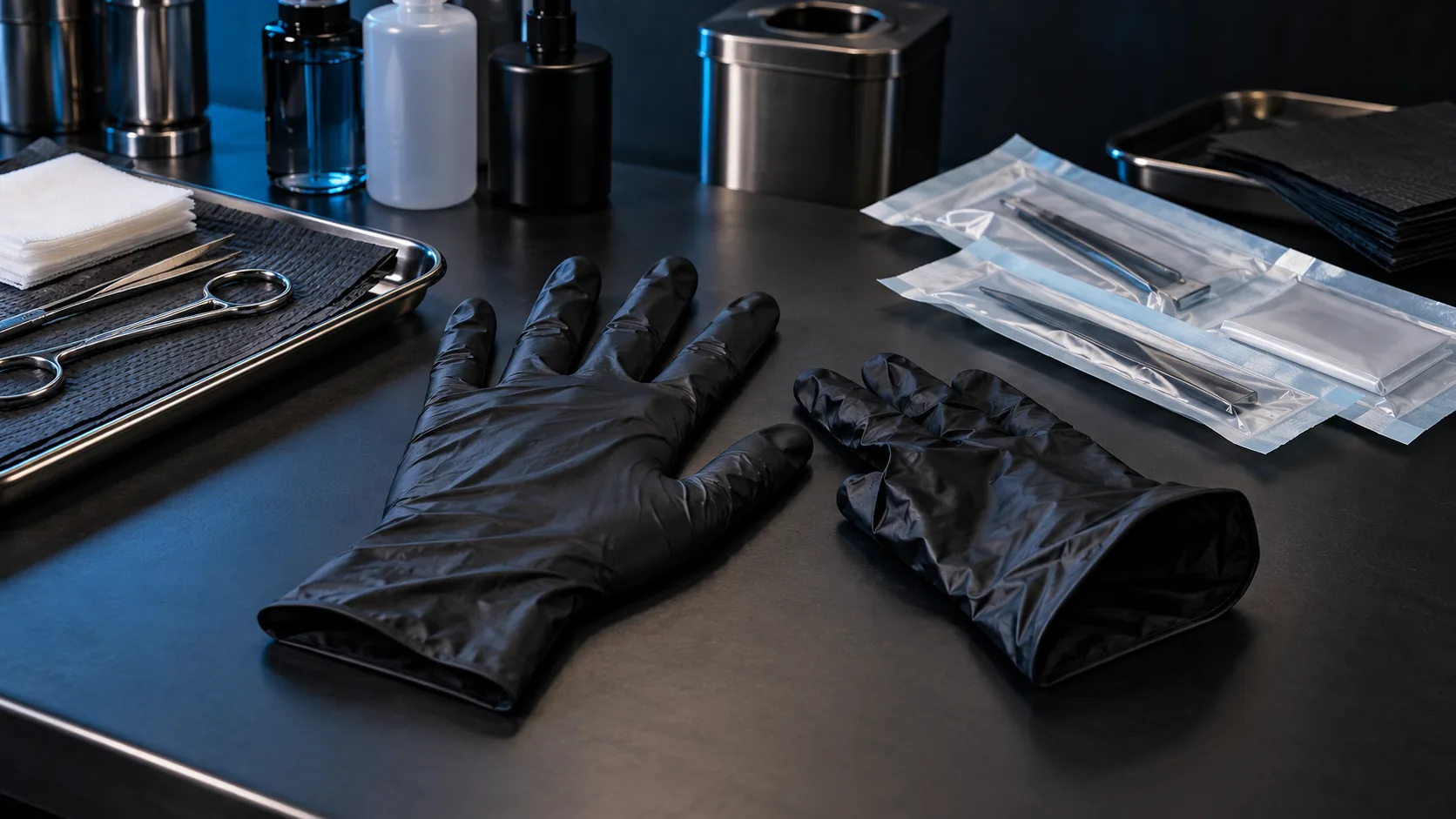
Single-use nitrile gloves can be an acceptable option for tattooing and body piercing, but nitrile material, black colour, thickness or the word examination does not establish suitability by itself. A studio needs a well-fitting exact product that is supported for the assessed task, intended purpose and destination market.
This guide separates practitioner protection, client cross-contamination, chemical contact, sterility and sharps safety. It is general procurement and infection-control information, not medical, legal or occupational-safety advice. Studios should follow their risk assessment, local licence conditions, competent advice and the current instructions for every glove, chemical and instrument.
Start with the four risks a glove decision must address
A single box can be used across several studio activities, but the hazards are not identical. List the work before choosing the product. Tattooing or piercing may involve blood and body fluids, contact between clean and contaminated surfaces, studio chemicals and close work around sharps.
Gloves are one control within a wider system. They do not replace hand hygiene, clean and dirty zoning, surface decontamination, safe instrument handling, an exposure response plan or immediate sharps disposal.
- Worker exposure: identify how blood or body fluid could reach skin, eyes or a puncture site.
- Client protection: map every point where hands move between the client, equipment, furniture, bottles, phones and waste.
- Chemical contact: list inks, cleaners, disinfectants and other products by exact name, concentration and likely contact pattern.
- Dexterity near sharps: assess fit, grip and working method separately from any puncture-protection requirement.
Nitrile, latex and vinyl are materials, not automatic safety grades
HSE's SR12 guidance for electrolysis, piercing, tattooing and micropigmentation identifies single-use nitrile gloves as an acceptable option. It also says that, where latex is selected, powder-free low-protein material should be chosen to reduce allergy risk. Local conditions can be more specific, so the studio should check the rules that apply where it operates.
Material names do not replace exact-product evidence. Compare the stated intended purpose, fit, powder and latex information, formulation statements, biological protection evidence and chemical data for the actual SKU. Do not transfer a claim from a different colour, thickness, size, formulation or market version.
Black colour is a preference, not a performance claim
Black gloves are common in studios and may suit a visual preference, but colour does not prove medical-device status, PPE conformity, sterility, viral protection, chemical resistance or protection from sharps. A black glove with an AQL value is not automatically suitable for tattooing or piercing.
Keep colour, texture and presentation in the comfort section of the brief. Keep intended purpose, standards, conformity documents, test evidence and chemical compatibility in the approval section. That separation makes it harder for a visual cue to be mistaken for technical evidence.
Use event-based glove changes and hand hygiene
HSE says glove use is not a replacement for effective hand washing. Its bloodborne-virus guidance calls for a fresh pair of disposable examination-style gloves for each client procedure, disposal between procedures and replacement after a temporary interruption such as answering a phone.
A fixed hourly interval can miss the event that actually contaminates a glove. Build the studio procedure around observable change points and make replacement stock easy to reach without crossing a clean zone.
- Perform hand hygiene before donning and after removal, following the studio's infection-control procedure.
- Use a fresh pair for each client and procedure.
- Change between clean and contaminated activities on the same client.
- Change after touching phones, faces, hair, drawers, doors or other uncontrolled surfaces.
- Change immediately if the glove is torn, punctured, visibly contaminated or otherwise compromised.
- Discard after removal. Never wash or reuse a disposable glove.
Check studio chemicals against the exact glove
No glove material protects against every substance for every duration. HSE advises selecting chemical gloves as part of the task risk assessment and using product information or manufacturer data for the substances handled.
Ask for compatibility data for the exact ink, cleaner or disinfectant, including concentration, temperature, contact pattern, test method and glove reference. Laboratory breakthrough time is not a safe-wear time. A splash task, repeated wiping and prolonged immersion can require different controls even when the chemical name is the same.
Keep sharps safety separate from glove claims
HSE states that gloves cannot prevent all inoculation injuries from sharps. Disposable nitrile examination-style gloves must not be described as puncture-proof or needlestick-proof. If a task needs puncture resistance, that is a separate PPE and method decision which must not compromise the procedure or create another risk.
The main controls include planning hand positions, avoiding bending or forcing needles, keeping sharps pointed away from hands, using suitable tools where appropriate, training staff and disposing of each sharp immediately into the correct container at the point of use. Studios also need a clear response procedure for any exposure incident.
Verify the market route and the exact product file
Start with intended purpose. A glove represented as PPE, a medical examination glove or a dual-use product has different evidence routes. Keep conformity marking, medical-device status, microorganism protection, sterility and chemical protection as separate fields.
ISO 374-5:2024 specifies requirements and test methods for protective gloves intended to protect the user against microorganisms. A published ISO edition is not automatically the same as the current designated or harmonised reference for every market. Check the declaration, market status and product documents that actually apply at the time of purchase.
- Exact model, SKU, sizes, colour or formulation scope and legal manufacturer.
- Stated intended purpose and whether the evidence route is PPE, medical device or both.
- Current Declaration of Conformity and instructions for use for the destination market.
- Microorganism or virus claim and the supporting test and marking evidence, where claimed.
- EN 455 evidence only when the exact product is represented as a medical examination glove.
- AQL claim with the applicable test method and the exact product scope.
- Chemical data for named studio products and realistic contact conditions.
- Lot traceability, pack integrity, storage conditions and labelled expiry.
Check nation, council and licence conditions
The UKHSA tattoo and body-piercing toolkit applies to England and promotes infection-prevention practice, but licensing and registration arrangements vary across UK nations and local authorities. The GOV.UK licensing page directs businesses in England and Wales to their local council, while Scottish councils operate licensing under their own arrangements.
Record the nation and local authority in the buying brief. Ask the studio operator to reconcile the glove specification with the licence, byelaws, inspection expectations, insurance conditions and current internal procedure before approval.
Studio glove buying checklist
A useful supplier enquiry gives enough detail to test suitability without assuming that a popular colour or generic catalogue category is adequate.
- Separate tattooing, piercing, cleaning, decontamination and waste tasks.
- Name the blood, body-fluid, splash, chemical and sharps exposure routes.
- List every ink, cleaner and disinfectant with concentration and safety data sheet where available.
- State nation, local authority, intended purpose and required document route.
- Provide the size mix and arrange fit trials for dexterity, cuff security, texture and grip.
- Define event-based change points, hand hygiene and contamination zones in the studio procedure.
- Request batch traceability, storage, expiry and packaging-integrity information.
- Document training, incident response, clinical waste and sharps controls separately.