How to Reduce Risk When Sourcing Nitrile Gloves in Bulk
A practical framework for controlling product evidence, inspection, payment terms and repeat supply when purchasing nitrile gloves at scale.
Published by NewGlove

Bulk nitrile glove procurement should not feel like a gamble. A container order can affect cash flow, customer commitments and operational continuity, so buyers need more than a price and a product photograph. They need a controlled route from the opening brief to product approval, inspection, payment and repeat supply.
NewGlove offers qualifying business customers commercial arrangements designed to reduce that uncertainty. Depending on financial checks, trading history, order structure and written approval, these arrangements may include no upfront cash payment, inspection before payment becomes due, 60-day terms from the bill of lading date and a transferable Letter of Credit. The precise structure and responsibilities are agreed for each approved programme.
Start with the risk, not the glove colour
Sourcing risk begins when a buyer, supplier and manufacturer are working from different assumptions. Before discussing price, record the intended use, users, destination market, estimated volume, delivery points and the operational problem the glove needs to solve.
A medical examination requirement, an industrial chemical task, food handling and automotive assembly can lead to different product, evidence and performance questions. Material and colour alone do not establish suitability. The exact glove and its current documents must be reviewed against the stated use.
- Define the task, environment, wearer and expected contact pattern.
- Identify the countries and channels in which the gloves will be supplied or used.
- Record the forecast volume, delivery pattern and acceptable shelf-life position.
- Separate essential requirements from preferences before samples are requested.
Build the order around an exact product specification
A controlled specification gives the buyer and supplier one reference point. It should identify the exact product or SKU, material, colour, sizes, finish, dimensions, packaging, intended purpose and the documents required for the destination market.
Standards and certification statements should be matched to the precise glove rather than assumed from a product family or manufacturing site. NewGlove can structure a document request around the selected SKU, intended use and market so the buyer can review the current declarations, certificates, test reports, data sheets and labelling information relevant to the programme.
Agree inspection and acceptance before production
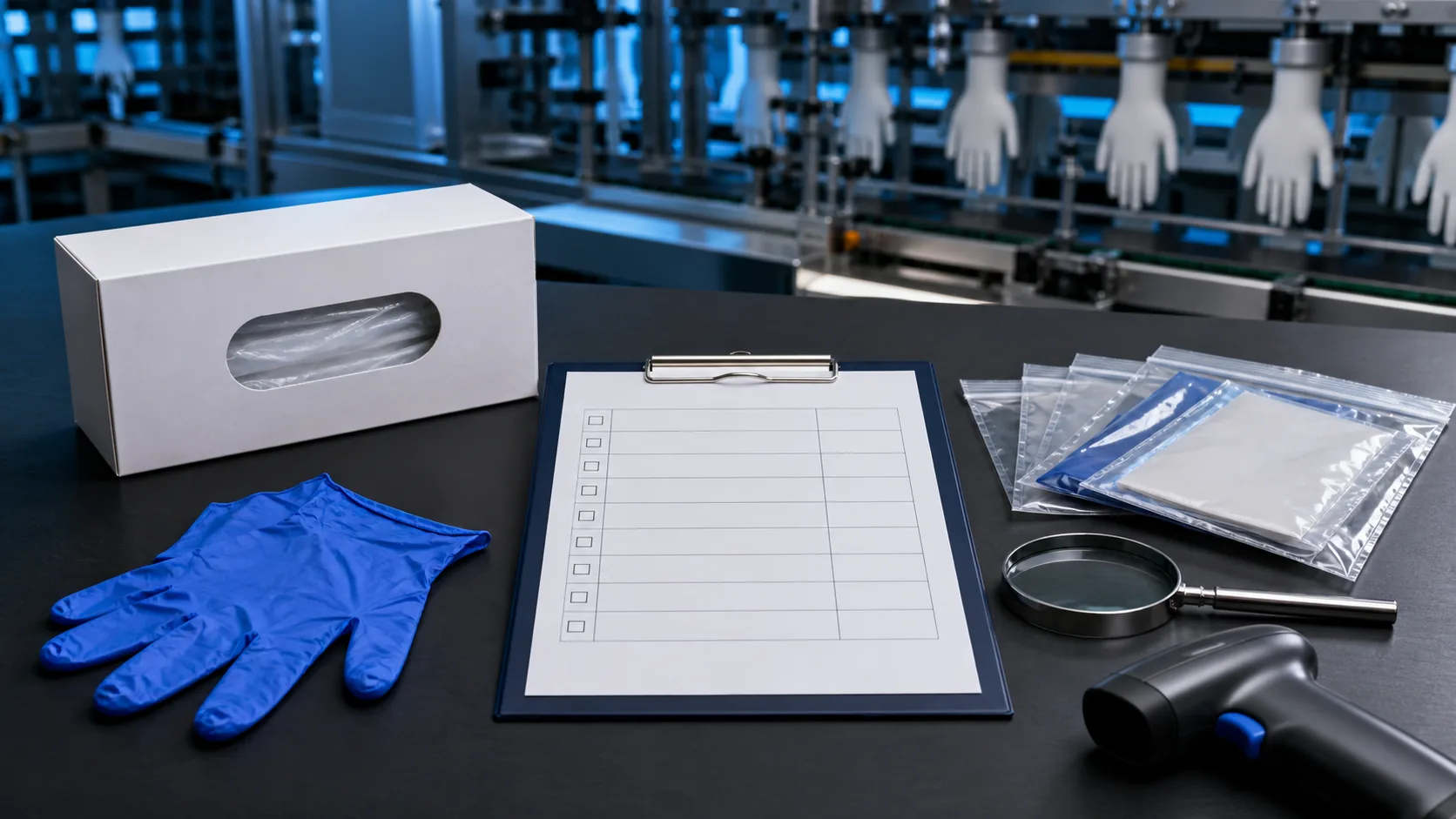
Inspection reduces uncertainty only when both parties know what will be checked and what happens next. Agree the sampling method, product attributes, document checks, packaging checks, acceptance criteria, inspection location and decision timetable before the order is released.
For an approved commercial arrangement, the buyer may be able to inspect delivered stock in its own warehouse before payment becomes due. That does not replace the product specification or contract. The agreement should explain how the inspection is recorded, how any concern is investigated and when accepted goods become payable.
- Match cartons, product references, sizes, colours and quantities to the order.
- Check lot information and connect it to the accompanying batch and product documents.
- Review packaging condition and agreed physical attributes using the documented method.
- Record acceptance, queries and any agreed corrective action within the stated inspection window.
Use commercial terms that fit the approved programme
Cash-flow pressure can make a large order difficult even when the product requirement is clear. NewGlove can assess alternative commercial structures for established business customers rather than assuming that every order must follow the same payment model.
Subject to financial checks, trading history, order structure and written approval, options may include no upfront cash payment, a defined inspection stage before payment, 60-day terms from the bill of lading date and a transferable Letter of Credit. These options are not automatic, and the final contract takes precedence over general website information.
- The legal customer, order value, destination and trading history form part of the assessment.
- Payment dates, required documents, currency, bank route and charges must be agreed in writing.
- Delivery, title, risk, inspection and acceptance responsibilities should align with the agreed transaction structure.
- Each party should obtain its own financial, banking and legal advice where appropriate.
Control quality through evidence and clear decisions
No responsible supplier can remove every commercial or operational risk with a slogan. A stronger approach is to define the product, agree the checks, review the current evidence and make the acceptance process visible to everyone involved.
This creates a more defensible route than an undefined quality guarantee. Buyers know what has been approved, what will be inspected, which documents should accompany the order and how a concern will be handled. The result is a programme built around traceability and agreed controls rather than assumptions about what is inside the container.
Match the glove to the industry and intended use
NewGlove develops nitrile glove programmes for buyers serving medical, industrial, food-service and automotive environments. Every programme still starts with the specific task. A glove selected for patient examination is not automatically supported for chemical handling, and an industrial glove is not automatically suitable for food contact or a medical purpose.
Share the intended use and destination market before selecting a product. NewGlove can then identify the relevant product route and the exact documents that should be requested. Final approval remains with the buyer and the responsible technical, safety or regulatory teams.
Plan repeat supply before the first container arrives
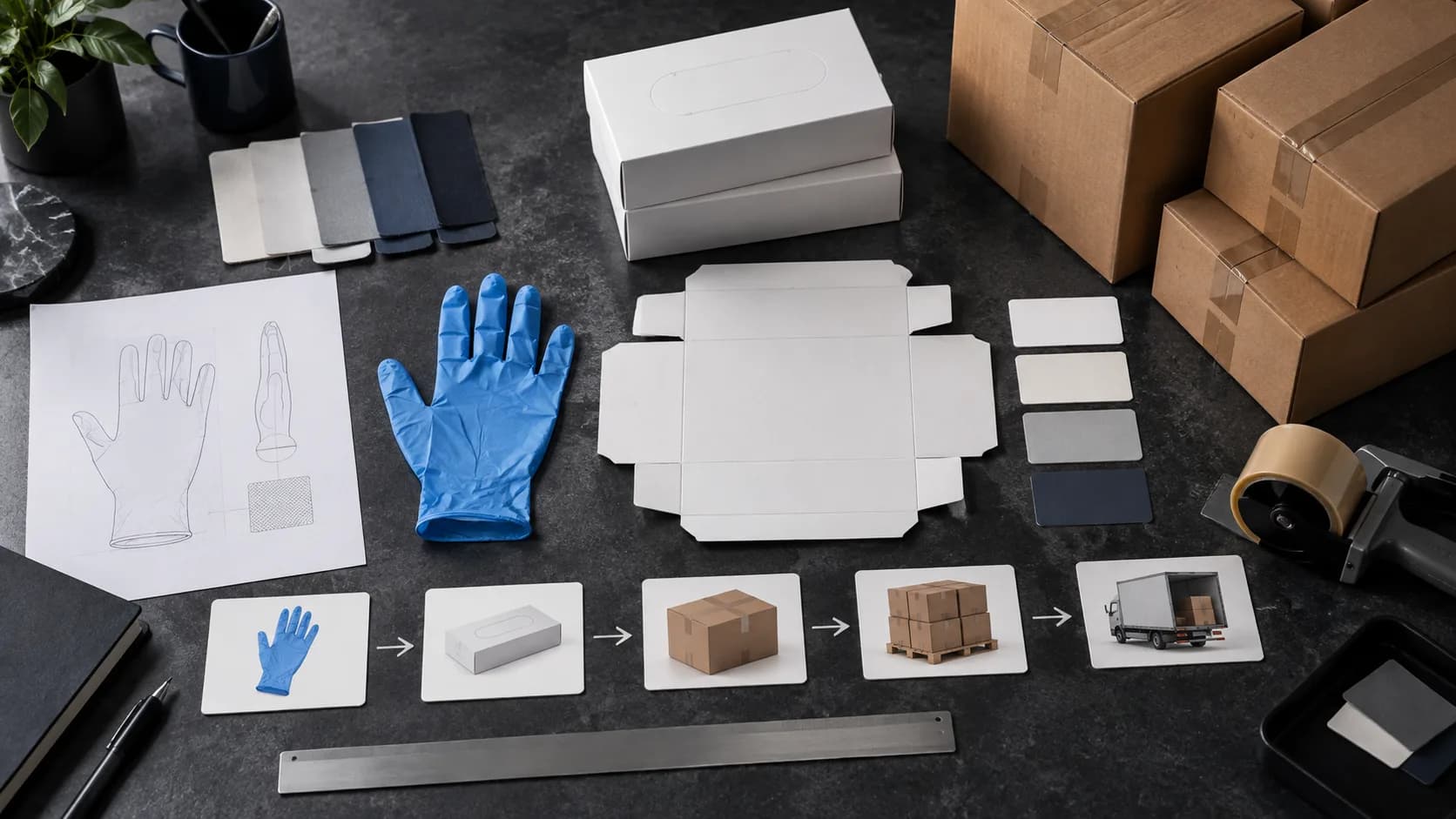
A successful first shipment is only the beginning of a reliable supply programme. Forecast usage, production and freight timing, storage capacity, shelf life and reorder points before stock reaches a critical level.
Keep the approved specification, artwork and document register under change control. If the formulation, manufacturer role, evidence, label or destination changes, review the effect before the next order. This protects continuity without allowing the programme to drift away from the product that was originally approved.
A practical buyer checklist
Before committing to a bulk nitrile glove programme, make sure the commercial and product controls answer the following questions.
- Is the intended use and destination market written clearly?
- Does the specification identify the exact product, sizes, packaging and evidence required?
- Are current documents available for the exact SKU rather than a similar glove?
- Are inspection scope, acceptance criteria and decision times agreed?
- Do the payment terms state eligibility, due dates, documents and banking responsibilities?
- Are delivery, title, risk and acceptance responsibilities consistent across the contract?
- Is there a controlled route for changes, complaints, nonconforming stock and repeat orders?