Private-label glove brief: the buyer’s checklist
A practical intake checklist for product, market, evidence, packaging, volumes and approvals before requesting a private-label glove quotation.
Published by NewGlove
Reviewed and updated 23 August 2026
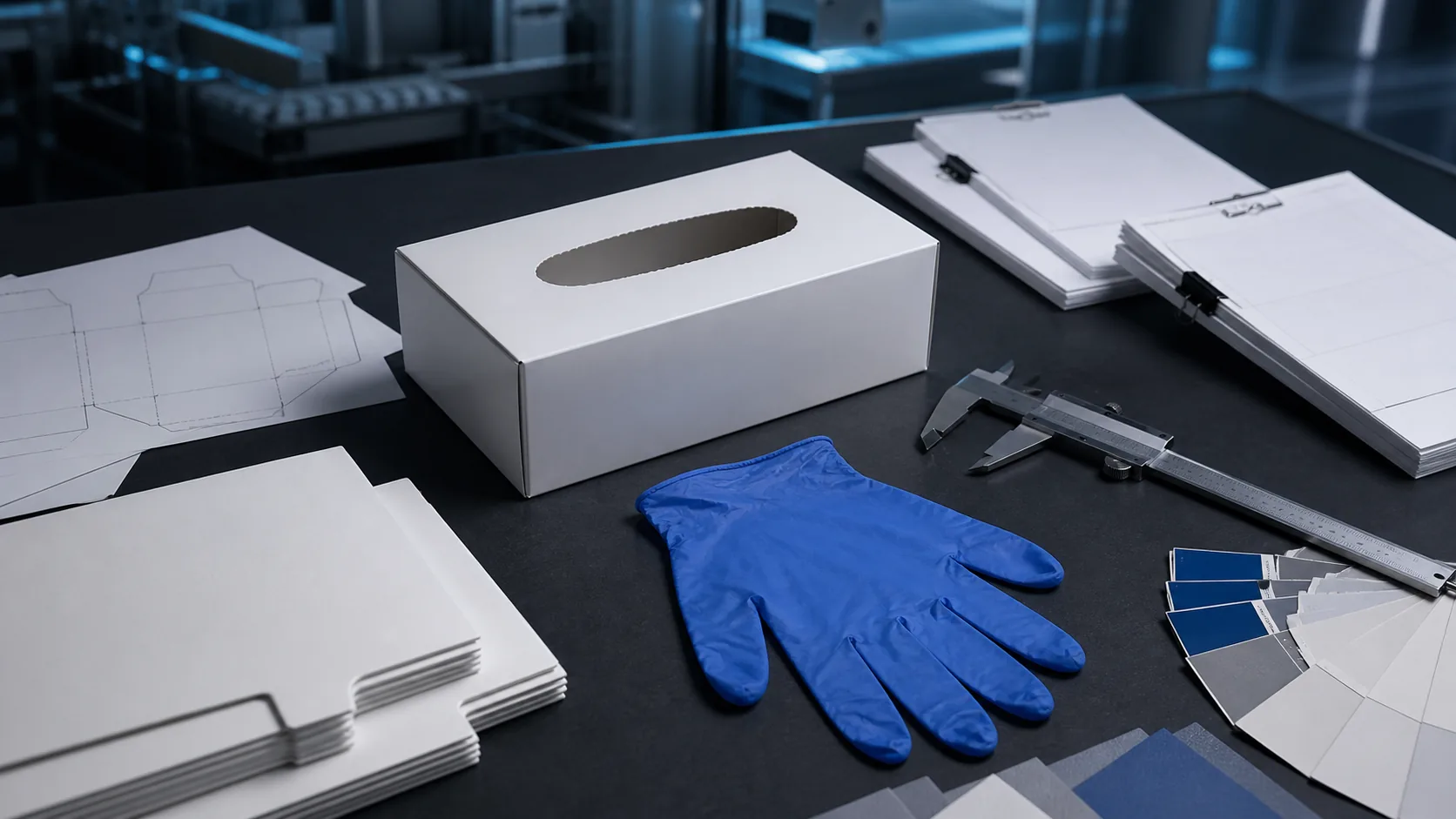
A useful private-label glove enquiry is not a request for “a blue nitrile glove with our logo”. It tells the manufacturer where the product will be sold, who will use it, which claims and evidence are required, how the pack must work, and who can approve each controlled output.
This checklist is designed for distributors, procurement teams, retailers and institutional buyers preparing that first brief. It complements NewGlove’s step-by-step private-label process guide by focusing on the information to gather before specification and quotation. Regulatory roles vary by product and market, so obtain qualified advice before assigning legal responsibility or approving labels.
1. Name the buyer, brand and destination markets
Start with the commercial parties and every country in which the glove may be placed on the market. “UK and Europe” is not specific enough: Great Britain, Northern Ireland and EU member states can follow different routes, and additional markets may require separate registrations, language or responsible-party arrangements.
- Contracting buyer, brand owner and invoicing entity.
- Destination countries, import route, sales channels and customer types.
- Launch window, delivery locations and forecast by market.
- Named commercial, technical, regulatory and artwork approvers.
- Existing trademarks, brand rules and any third-party licensing constraints.
2. Decide who will be the legal manufacturer
Private label can change regulatory responsibilities; it is not only a print instruction. Under the UK medical-device framework, the manufacturer definition includes responsibility for design, manufacture, packaging and labelling before a device is placed on the market under that person’s own name, including work carried out on its behalf.
Do not assume the physical factory, brand owner, importer or distributor automatically holds every responsibility. Record the intended legal manufacturer and other economic operators for each market, then confirm that allocation against the applicable rules and contract. The label, declaration, registration and technical file must tell the same story.
- Legal manufacturer and physical production site.
- Importer, authorised or responsible person, and distributor where applicable.
- Owner of the technical documentation, declaration and registrations.
- Owner of post-market surveillance, complaints, vigilance and corrective action.
- Contractual approval and notification route for regulatory or product changes.
3. Write the intended use before choosing the glove
Describe the user, task, environment and protection objective in plain language. A material, colour or competitor code is not an intended use. The manufacturer needs to know whether the glove is expected to serve a medical, PPE, food-contact, general handling or combined purpose and which hazards are present.
- Users and work settings, including any vulnerable patient or consumer groups.
- Substances, biological exposure, mechanical hazards and contact duration.
- Need for sterility or non-sterile supply, and single-use wording.
- Required fit, dexterity, grip, cuff coverage and change frequency.
- Tender clauses, internal standards and incumbent product reference.
4. Turn preferences into controlled product fields
Separate mandatory requirements from preferences and open choices. This prevents a visual sample from becoming the specification by accident and gives the manufacturer a clear basis for feasibility, evidence and price.
- Material, formulation constraints, natural-rubber-latex status and powder status.
- Nominal weight or thickness by measurement point, glove length and acceptable tolerances.
- Surface finish, finger or full texture, cuff design and interior treatment.
- Colour standard and tolerance, including whether colour is functional or only a brand choice.
- Size range, pieces per dispenser, dispensers per case and forecast size split.
- Defined inspection characteristics, test methods, acceptance criteria and approved reference sample.
5. Build a market-specific evidence list
List the documents and claims needed for each destination before artwork starts. Medical-device registration or a standards logo should never be treated as a general endorsement. The MHRA states that devices must be registered before being placed on the Great Britain market and that registration is not accreditation, certification, approval or endorsement.
For sensitive claims - including medical, PPE, chemical, food-contact or environmental statements - identify the exact test, product and wording to be supported. If evidence does not exist for the proposed formulation, remove the claim or change the programme before packaging approval.
- Applicable legislation and conformity route for each market.
- Current declarations, certificates, test reports and registration evidence.
- Product references, colours and sizes covered by each document.
- Instructions, warnings, storage, shelf life and disposal wording.
- Chemical data tied to exact substances and test conditions where relevant.
- Approved evidence for every comparative, performance or environmental claim.
6. Treat packaging as controlled product information
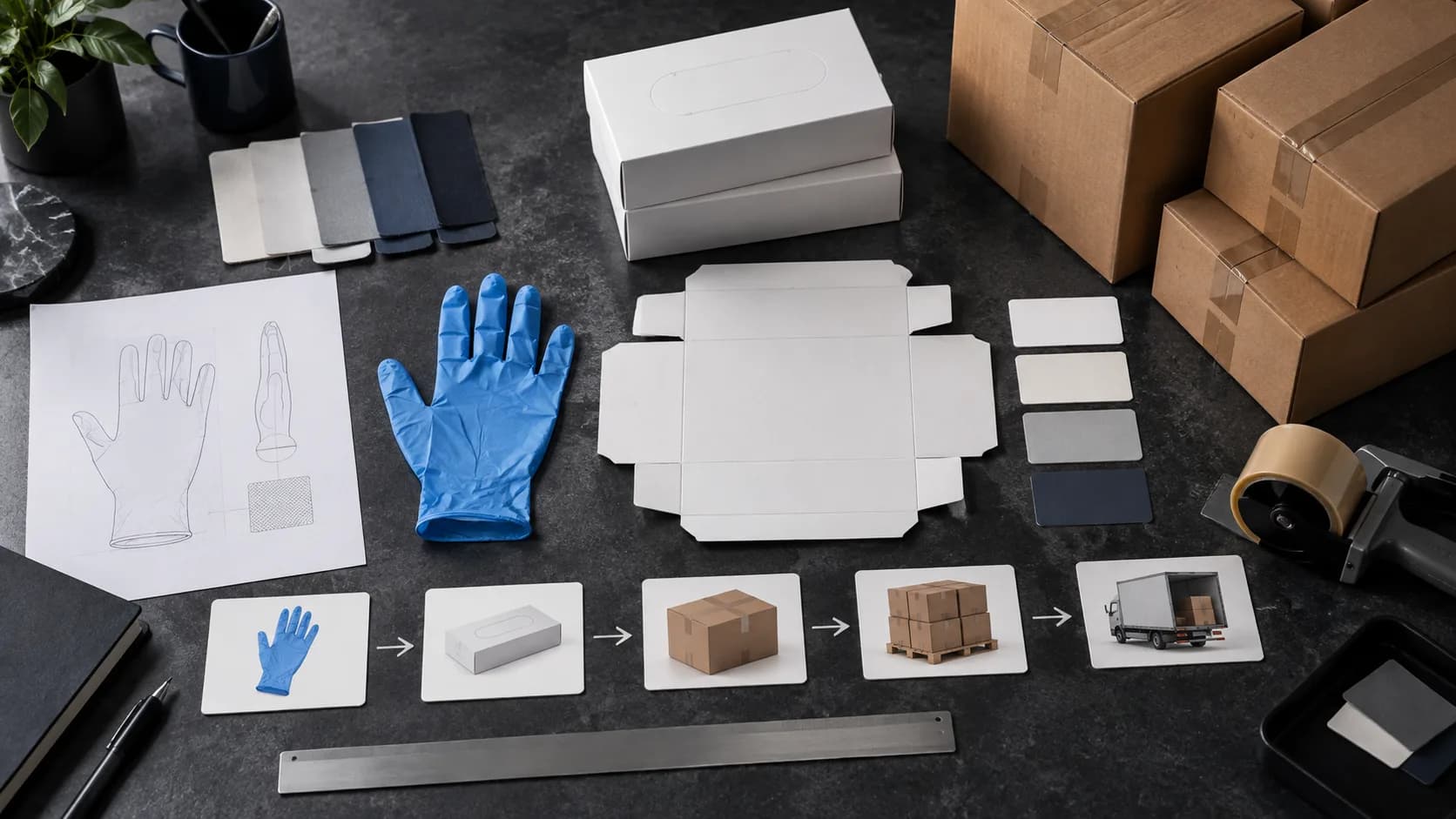
The dispenser and case do more than carry a brand. They identify the product, communicate required information and connect stock to its lot and expiry. Build a master-data sheet before graphic design so legal and operational content is not squeezed into an already approved layout.
- Product name, intended use, material, size, quantity and single-use or sterility status.
- Manufacturer and other required economic-operator names and addresses.
- Lot, manufacture or expiry presentation and storage information.
- Required symbols, marks, notified or approved-body numbers and languages.
- Barcode, SKU, case, pallet and warehouse master data.
- Artwork owner, translation reviewer, proof version and signed approval record.
7. State volumes and timing as assumptions
Provide annual demand, opening order, size split, delivery cadence, stock cover and acceptable launch range. Bespoke formulation, colour, testing, artwork and freight can affect minimum quantities and timing, so ask for a dated quotation with explicit assumptions rather than relying on a general website figure.
NewGlove confirms commercial minimums and programme timing in a dated quotation after the specification, artwork, evidence, destination and delivery terms are reviewed. Do not treat a general website figure or an earlier quotation as a current commitment.
- Opening and annual volume, plus forecast horizon and size split.
- Target delivery window, ship-to locations and delivery basis to be agreed.
- Artwork, testing, registration and sample-approval dependencies.
- Required remaining shelf life and stock-rotation policy.
- Reorder point, safety stock and process for forecast changes.
8. Define approvals and change control
Name the person authorised to approve each deliverable and the evidence they need. A first order should not move from a visual sample to production without signed specification, evidence and artwork gates. Repeat orders should use the same controlled revisions unless a documented change is approved.
- Commercial brief accepted and feasibility questions closed.
- Controlled product specification approved.
- Pre-production or reference sample approved against that specification.
- Regulatory file and claim matrix approved by the responsible reviewer.
- Artwork, translations and pack master data approved by version.
- Production release, lot-release records and delivery checks agreed.
- Complaint, nonconformance, corrective-action and change-notification process agreed.
A concise brief you can send
A manufacturer should be able to start a useful discovery call from the following one-page summary, with supporting documents attached where available.
- We are [buyer/brand] and plan to sell in [markets/channels].
- The glove will be used by [users] for [tasks], involving [hazards/contact].
- The proposed regulatory roles are [manufacturer/importer/responsible person], subject to confirmation.
- Mandatory product fields are [material, weight or thickness, sizes, finish, colour, pack].
- Required evidence and claims are [list], and our incumbent or tender documents are attached.
- Opening volume, annual forecast and target delivery range are [figures].
- Approvers for specification, regulatory content and artwork are [names/roles].