Private-label glove MOQ and lead time: what changes the quotation
Learn how glove specification, colour, packaging, testing, forecast, freight and approvals shape OEM minimums and lead times.
Published by NewGlove
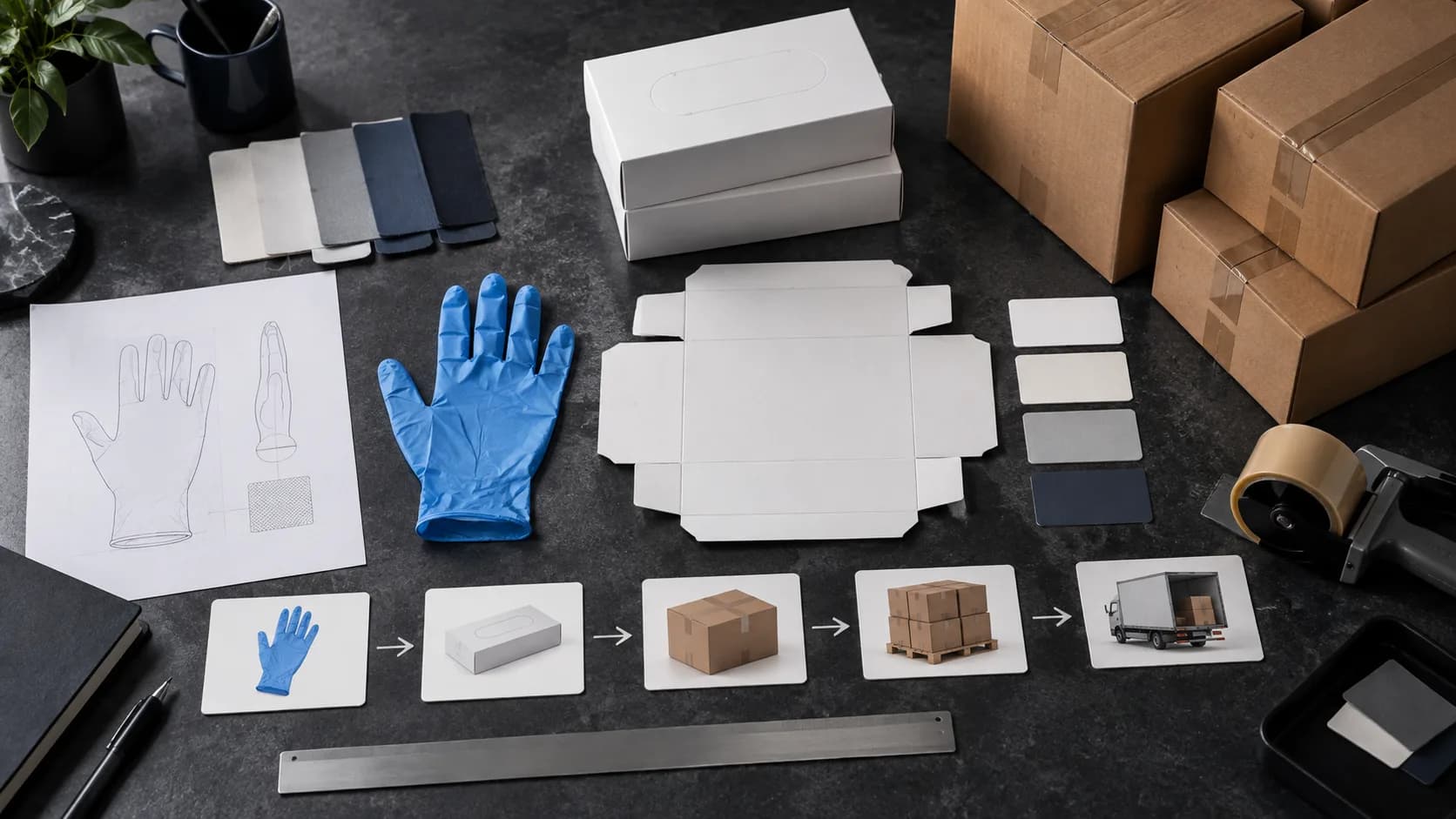
There is no reliable universal minimum order quantity or lead time for a private-label glove programme. Material, formulation, weight, colour, size ratio, packaging, artwork, testing, production route, freight and destination-market work all affect the written quotation.
Buyers can still make the process faster and more predictable. The practical move is to submit a complete brief, separate sampling from production, define approval owners and ask for dated milestones. This guide explains the quotation variables. It does not publish a fixed NewGlove minimum, price, capacity or delivery promise.
Why another supplier's MOQ is not your quotation
A published minimum can describe an existing stock glove with a printed label, a fully printed dispenser box, a custom colour or a formulation made through a different production route. Those are not equivalent programmes. Container utilisation, size ratios and the number of packaging versions can also change the workable batch.
Use competitor examples only as questions for discovery. Do not insert a public number into a launch budget until the supplier confirms what it includes, how long it is valid and which specification, pack and delivery basis it covers.
The variables that shape minimum order quantity
MOQ is usually the result of several linked minimums. One may arise from glove production, another from printed packaging and another from an efficient shipment. The largest constraint can change when the brief changes.
- Base glove or custom formulation, including material, target weight or thickness, cuff, finish and powder status.
- Standard colour versus a custom colour match and the approval method for colour variation.
- Size range and size ratio, especially where one size has much lower forecast demand.
- Plain, labelled or fully printed dispenser boxes and outer cartons.
- Number of brands, languages, barcodes, destinations and artwork versions.
- Product testing, market documentation or validation required before production release.
- Production route, factory allocation, pack-out plan, freight mode and shipment utilisation.
- Opening order, annual forecast and credible repeat-order pattern.
Break lead time into controlled stages
A single promise such as eight weeks hides the part most likely to slip. Ask for a milestone plan that names the input, owner and approval needed at each stage.
- Brief review: destination, intended use, specification, volume, packaging and evidence gaps identified.
- Feasibility and quotation: production route, commercial basis, responsibilities and exclusions confirmed.
- Samples and evidence: sample type, evaluation criteria and exact-product document scope agreed.
- Artwork: dielines issued, copy reviewed, barcodes and market-specific content approved under version control.
- Pre-production approval: specification, sample, artwork, responsible roles and release criteria signed off.
- Production and inspection: production slot, lot controls, inspection records and release decision completed.
- Freight and customs: booking, export, transit, import responsibilities and delivery point confirmed.
What can run in parallel and what must wait
Packaging structure, provisional artwork, logistics planning and evidence-gap review can often begin while a sample is being evaluated. Early parallel work helps only when files are clearly marked draft and someone controls changes.
Do not release final print before the product identity, intended use, responsible parties and required symbols are approved. Do not treat an indicative production slot as booked inventory, and do not approve a substitution from an email description. The controlled specification, sample and artwork should converge before production release.
Forecasting changes the commercial discussion
A supplier needs more than the first order. Share a realistic annual forecast, monthly or seasonal usage, the size mix and the number of artwork variants. Explain whether the brand can consolidate destinations or accept staggered deliveries. This helps distinguish a manufacturing minimum from the quantity needed at one warehouse on one date.
Set a reorder point from approved production and delivery assumptions, not from a generic calendar rule. Include stock on hand, forecast demand, remaining shelf life, freight variability, quality-release time and a documented risk buffer. Recheck the plan when specification, packaging, demand or route changes.
Quotation red flags
A low headline minimum or fast date is not useful if the evidence scope and responsibilities remain unclear. Pause the programme when important controls are missing.
- Deposit requested before the exact specification, evidence scope and deliverables are recorded.
- Artwork files have no owner, revision, approval date or link to the product reference.
- Certificates are generic to a factory or product family and do not support the exact offered SKU and claim.
- The quotation says shipping included without a named delivery point, trade term, freight mode or responsibility split.
- Sampling, production, release and transit are collapsed into one unexplained lead-time number.
- The supplier may substitute material, colour, facility, packaging or documentation without written approval.
- The buyer's brand role, legal-manufacturer role, importer role or market obligations are assumed rather than assigned.
One-page RFQ input checklist
A complete opening request reduces avoidable back-and-forth and exposes decisions that still need an owner.
- Destination countries, sales channels, intended users and intended use.
- Material, formulation restrictions, weight or thickness, colour, texture, cuff and sizes.
- Estimated annual volume, opening order, size ratio and forecast pattern.
- Pieces per box, cartons per case, artwork versions, languages and barcode ownership.
- Medical, PPE, food-contact or other evidence required for the exact product and market.
- Sample purpose, evaluation criteria, approval owners and target decision date.
- Delivery geography, preferred freight mode, named place and proposed Incoterms rule.
- Target launch date, critical dependencies and acceptable alternatives that still require written approval.
What a useful written quotation should show
The quotation should identify the product basis, sizes and ratio, packaging versions, commercial quantity, unit of measure, evidence included, artwork or tooling assumptions, payment terms, validity period and milestone plan. It should also name the delivery basis and the responsibilities that sit outside the price.
ICC explains that Incoterms rules allocate tasks, costs and risks around delivery, but they are not a substitute for the sale contract. Record the named place and rule version precisely. Keep the quotation, controlled specification, artwork approval and any later change together so a repeat order does not rely on memory.