Powder-free disposable gloves: what the claim means and what it does not prove
Powder-free describes one product characteristic. Buyers still need to verify material, residual-powder evidence, intended use, allergens, fit and task suitability.
Published by NewGlove
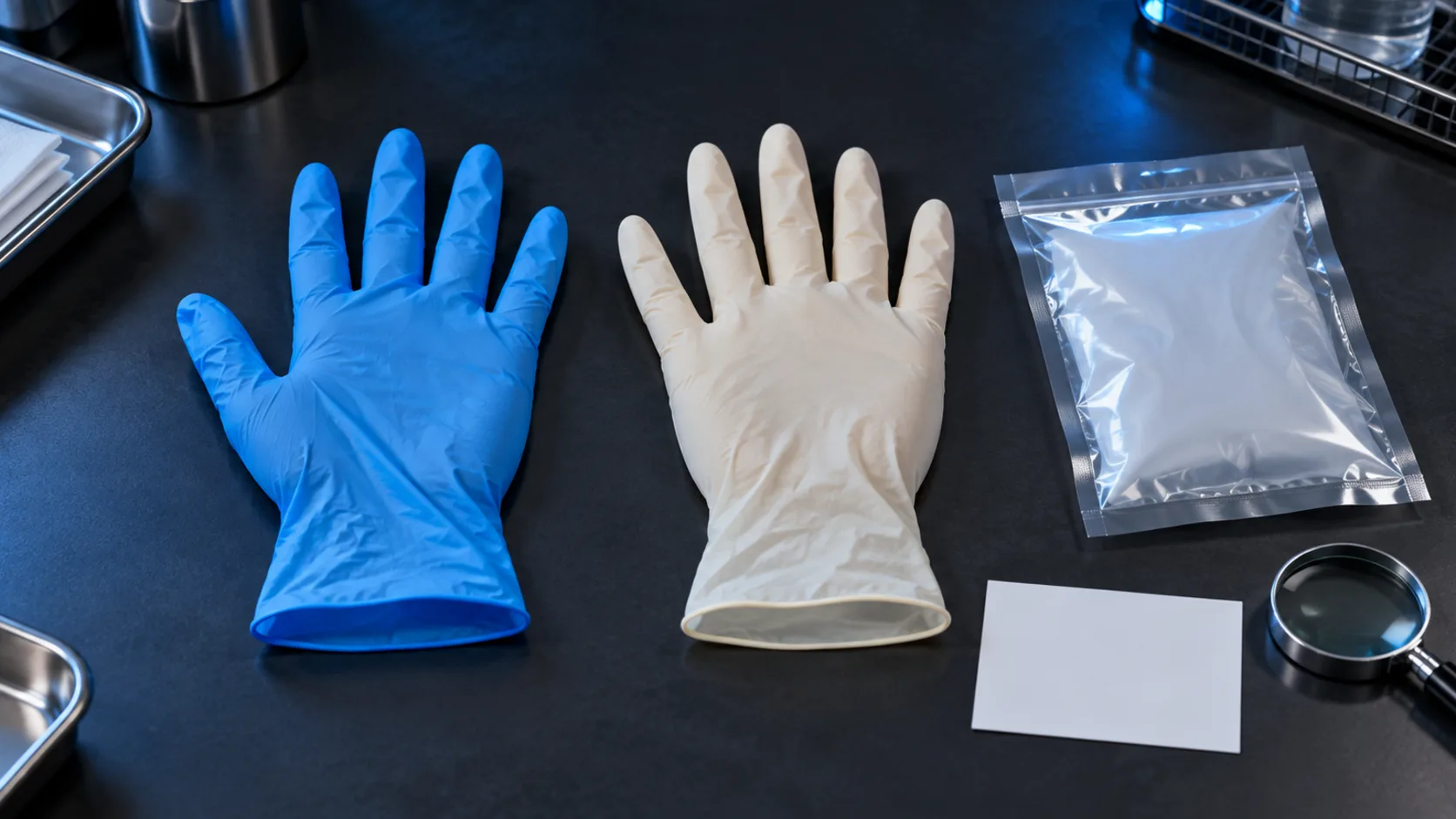
Powder-free tells a buyer that a glove is not intentionally presented as a powdered glove, but it does not mean that every removable particle has disappeared. It also does not mean latex-free, accelerator-free, sterile, medical grade, food safe or chemically resistant.
A sound specification connects the claim to the exact product, test method, material and intended task. This guide is general procurement and occupational-health information, not medical or safety advice. Follow the workplace risk assessment and obtain competent clinical or occupational-health advice where allergy or sensitisation is a concern.
Understand why glove powder was used
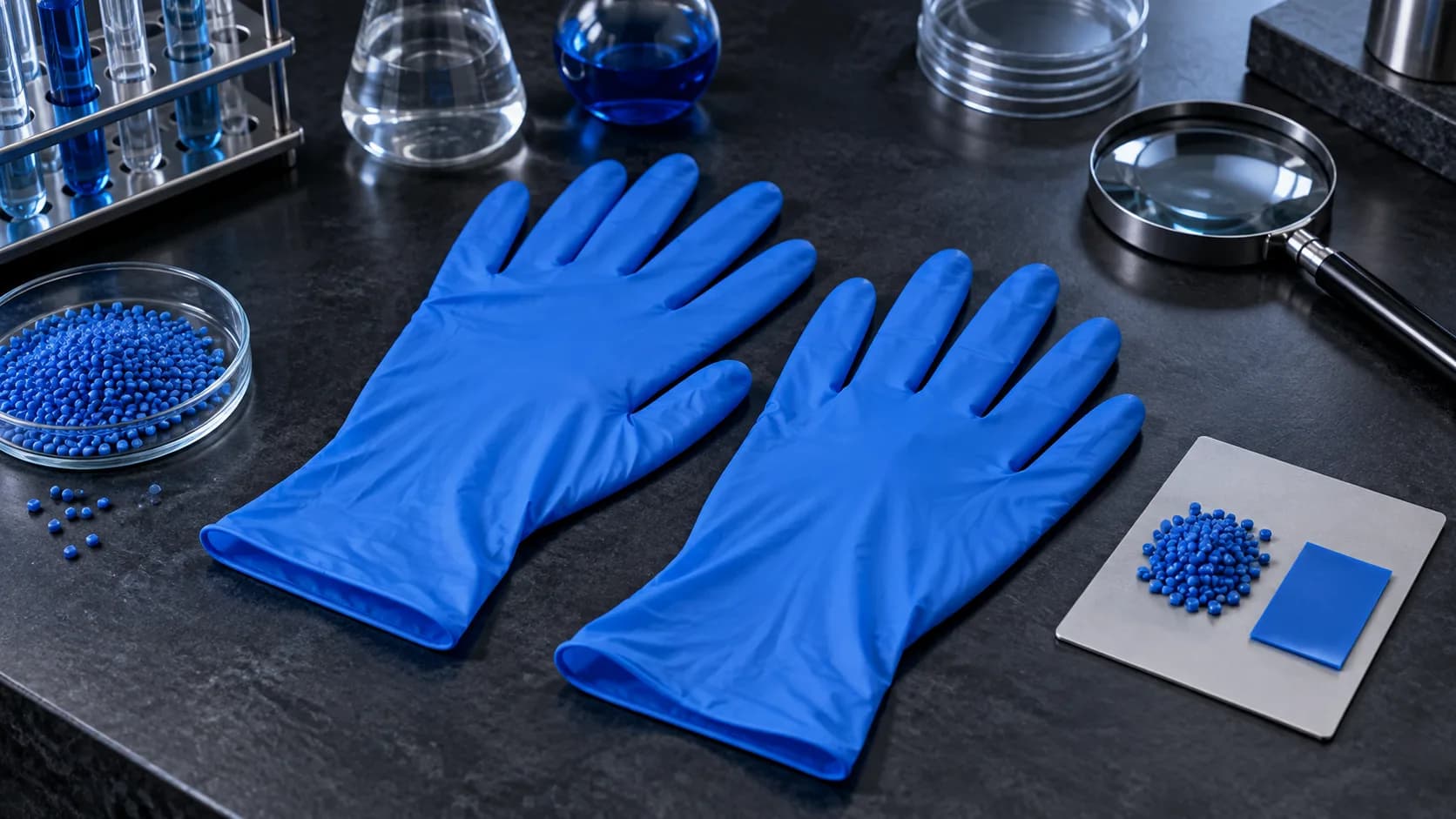
Historically, powder could make gloves easier to don and help separate surfaces during manufacture. That convenience came with risks. HSE explains that natural rubber latex proteins can attach to powder particles and become airborne when powdered latex gloves are put on or removed.
Modern manufacturing can use other release and surface-treatment processes. The buyer should not infer the process from a marketing phrase. Ask how the exact product is finished and how the powder-free claim is controlled.
Keep powder-free, latex-free and low-protein separate
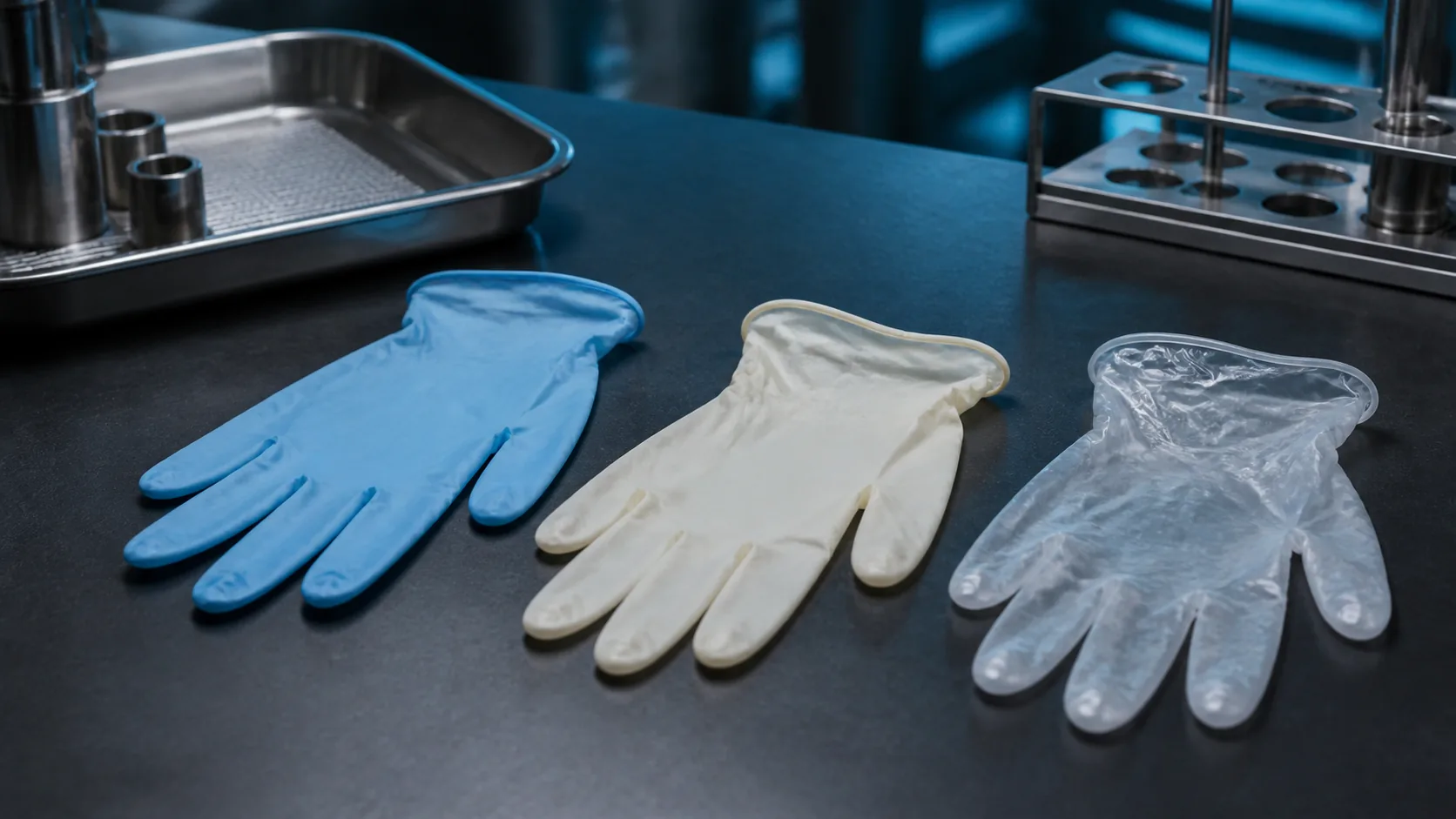
A latex glove can be powder-free. A nitrile or vinyl glove can also be powder-free. Powder status therefore does not identify the base material. HSE advises that, where single-use latex is selected after assessment, it should be low-protein and powder-free. It separately advises latex avoidance for people with existing natural-rubber-latex allergy.
Do not compress those statements into a general allergy-safe claim. Powder-free does not establish absence of latex proteins, other residual chemicals or substances that may matter to a particular wearer.
Know what the US medical-glove ban covers
FDA's final rule banned powdered surgeon's gloves, powdered patient examination gloves and absorbable powder for lubricating a surgeon's glove because the agency found an unreasonable and substantial risk that could not be corrected through labelling. The rule does not turn every non-powdered glove into an FDA-cleared medical device.
Medical-device classification, 510(k) clearance, establishment registration, device listing and the powder-free characteristic are separate checks. A buyer should verify each applicable record for the exact US product.
Ask how residual surface powder was measured
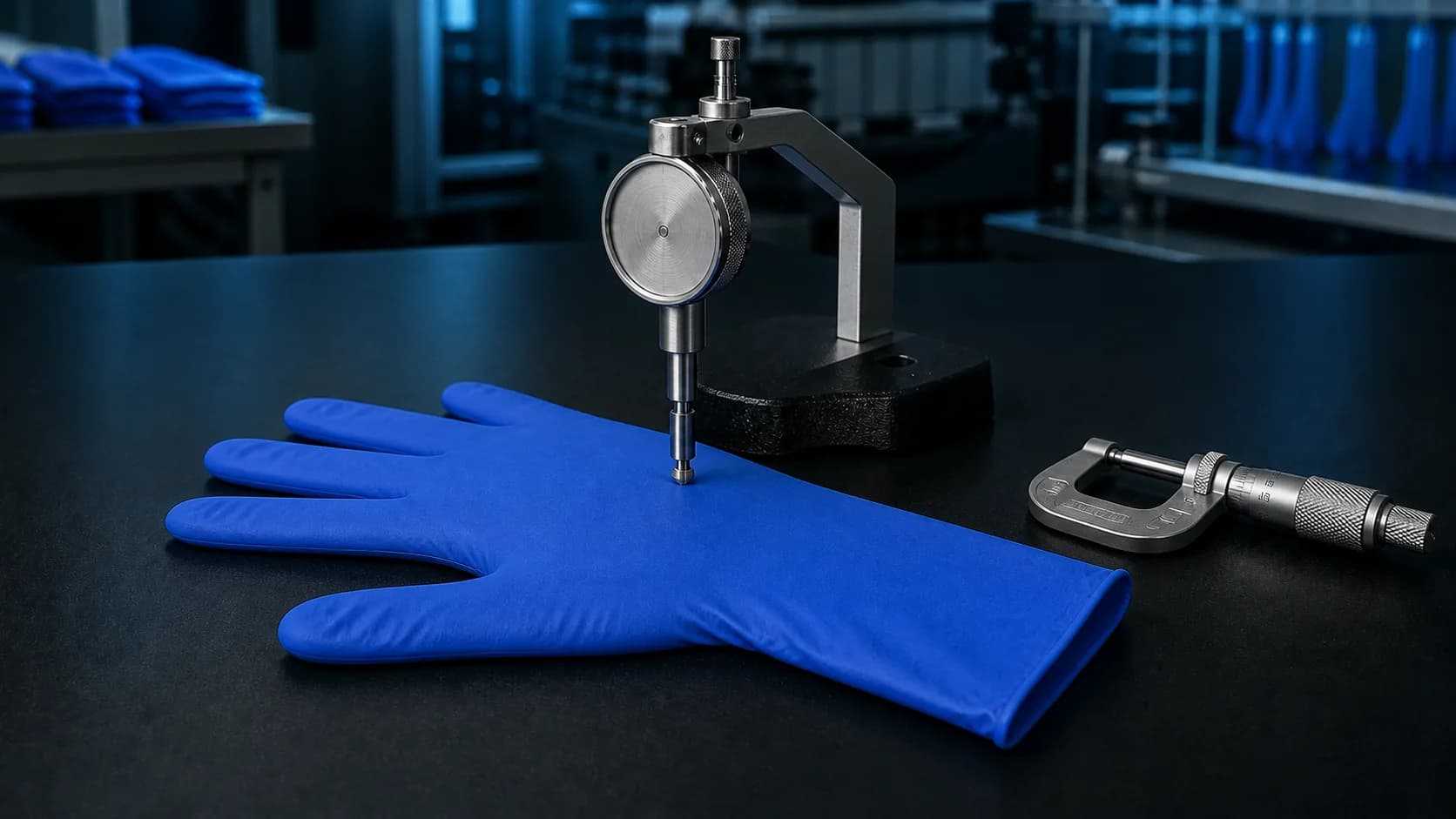
ISO 21171:2006 remains current after confirmation in 2024 and specifies methods for determining readily removable surface powder on medical gloves. It includes methods for powder-free gloves but does not prescribe safety limits. ASTM D6124-06(2022) is an active method for residual powder on medical gloves and reports average mass per glove.
A test method name by itself is not a product claim. Request the report, sample identity, date, result, acceptance criterion and product-family rationale. Check that the supplied glove matches the tested formulation and manufacturing process.
- Exact SKU, material, colour, size scope and manufacturing location.
- Test method and edition, laboratory, report date and sample identity.
- Measured result and the requirement used to accept the product.
- Statement of how the tested samples map to production lots and other sizes.
- Change-control trigger for formulation or surface-treatment changes.
Do not use powder-free as a shortcut for suitability
Powder-free does not establish resistance to a named chemical, biological protection, food-contact status, sterility, freedom from holes, tensile performance or safe wear time. Those properties need their own exact-product evidence and applicable market route.
Start with intended use and the hazards. Then decide whether the product also needs medical-device evidence, PPE conformity, chemical data, food-contact support or a sterile presentation. Keep the fields separate in the approval record.
Assess donning, fit and skin-management controls
Removing powder can change how a glove feels during donning, but comfort depends on more than one characteristic. Size, hand shape, surface treatment, formulation, moisture, wear duration and the task all matter. Trial the exact product with the intended workforce and technique.
Gloves can contribute to heat, sweating and occlusion. A workplace programme should cover correct sizing, hand hygiene, drying, change points, glove breaks where safe and routes for reporting skin symptoms. Seek occupational-health advice when workers report dermatitis, urticaria, respiratory symptoms or suspected allergy.
Powder-free glove buyer checklist
Use these questions when comparing products or writing a tender. They stop a single label claim from carrying more meaning than its evidence supports.
- What is the exact material and formulation, and does it contain natural rubber latex?
- What current method and result support the powder-free claim?
- Is low-protein evidence required for a selected latex product?
- Are any accelerator-free, allergen or sensitivity claims made, and what exact evidence supports them?
- What intended use and market status are stated for the exact SKU?
- Which separate documents support medical, PPE, chemical, food-contact or sterile claims?
- Have representative wearers trialled the size range, donning, grip and dexterity?
- Are lot traceability, storage, expiry and formulation-change controls documented?