Can disposable gloves be recycled? A UK buyer’s guide
How to assess glove waste by use, contamination, local collection rules and the waste hierarchy without turning recyclability into a green claim.
Published by NewGlove
Disposable gloves should not be placed in ordinary workplace recycling simply because they contain plastic or rubber. Whether a specialist route can accept them depends on the glove material, what the gloves contacted, the waste classification, segregation quality, local service and the recycler’s actual process.
For most organisations, the first environmental question is not which recycling logo belongs on the bin. It is whether gloves are needed for the task, whether the right glove is being used and changed at the right time, and whether uncontaminated and contaminated streams are being kept apart. This guide is general procurement and waste-reduction information, not infection-control, chemical-safety, environmental or legal advice. Follow local policies and obtain advice from competent waste and safety specialists.
The short answer
Do not put used disposable gloves into a dry mixed-recycling stream unless the waste collector has explicitly confirmed that the exact glove waste is accepted. Thin flexible gloves are not automatically compatible with standard plastic-sorting and recycling processes, and contamination can make the route unsafe or unlawful.
- Clean, unused production offcuts or uncontaminated gloves may be accepted by a verified specialist scheme.
- Gloves contaminated with body fluids, medicines, hazardous chemicals, food or other substances need classification and disposal appropriate to that contamination and setting.
- A material claim such as nitrile, latex, vinyl, biodegradable or plant-based does not by itself establish a recycling or composting route.
- Local acceptance, segregation, traceability and the real treatment outcome matter more than a generic recyclability statement.
Apply the waste hierarchy before looking for a recycling scheme
UK waste guidance places prevention ahead of preparing for reuse, recycling, other recovery and disposal. Disposable gloves must not be reused, so prevention means avoiding unnecessary use while preserving clinical, food-safety and workplace controls.
NHS England’s Gloves-Off case study shows how a clinical team combined infection-prevention leadership, procurement input, auditing and staff engagement to reduce inappropriate non-sterile glove use. The lesson is not to remove gloves from tasks that need them. It is to make the decision task specific and evidence led.
- Check whether a glove is required by the risk assessment, clinical procedure or hygiene control.
- Use hand hygiene rather than gloves where current clinical guidance says gloves are not indicated.
- Choose a reusable control only when it is safe, validated and allowed for the task.
- Specify the lightest appropriate glove only after barrier, chemical, fit and task requirements are met.
- Reduce packaging and transport impact without weakening traceability, shelf-life protection or damage control.
Classify by use and contamination, not colour
Bin colours and waste descriptions vary by sector and nation. Start with what happened to the glove. A blue nitrile glove used only for an uncontaminated packing task may have a different route from an identical glove exposed to blood, cytotoxic medicine or solvent.
Environment Agency guidance distinguishes infectious, hazardous medicinal, offensive and other healthcare wastes. It lists certain contaminated masks, gowns and gloves within healthcare offensive waste where the relevant criteria are met, while infectious or chemically contaminated items follow other routes. A competent local assessment should decide the classification.
- Unused or quality-control waste: record why it was discarded and whether a clean specialist route accepts it.
- General workplace use: identify oils, inks, foods, cleaning agents or other residues and check the collector’s acceptance criteria.
- Healthcare use: follow the current healthcare-waste policy and assess infection, medicine and chemical contamination.
- Laboratory and industrial use: use the chemical inventory, safety data sheets and hazardous-waste assessment.
- Mixed stream: assume the most restrictive relevant route until safe segregation and classification are demonstrated.
What England’s workplace recycling rules do and do not mean
Workplaces in England must separate specified dry recyclable materials, food waste and residual waste under the simpler-recycling rules, with a later start for qualifying micro-firms. This does not mean every plastic-shaped product belongs in the dry-recycling bin.
The collector’s written specification determines which plastic formats it can take, while separate healthcare and hazardous-waste duties still apply. Scotland, Wales and Northern Ireland have their own waste requirements, so a UK-wide organisation should not copy one site’s bin instruction across every location without review.
How to test a specialist glove-recycling claim
A take-back or specialist recycling offer can be useful, but buyers should verify the complete chain rather than count collected boxes as recycled material. Ask for an operational answer for the exact waste stream, geography and volume.
- Accepted polymers, brands, glove types and minimum or maximum contamination levels.
- Excluded substances and sectors, including biological, chemical, pharmaceutical, food and sharps risks.
- Required bins, liners, labelling, storage, transport and staff training.
- Collection coverage, minimum quantities, consolidation model and what happens if a load is rejected.
- Permits, registered carriers, receiving facility and the process used after collection.
- Measured output: how much becomes recycled material, energy recovery or disposal, and how residues are reported.
- Evidence available to the buyer, such as weights, transfer records and periodic treatment reports.
Do not confuse biodegradation, composting and recycling
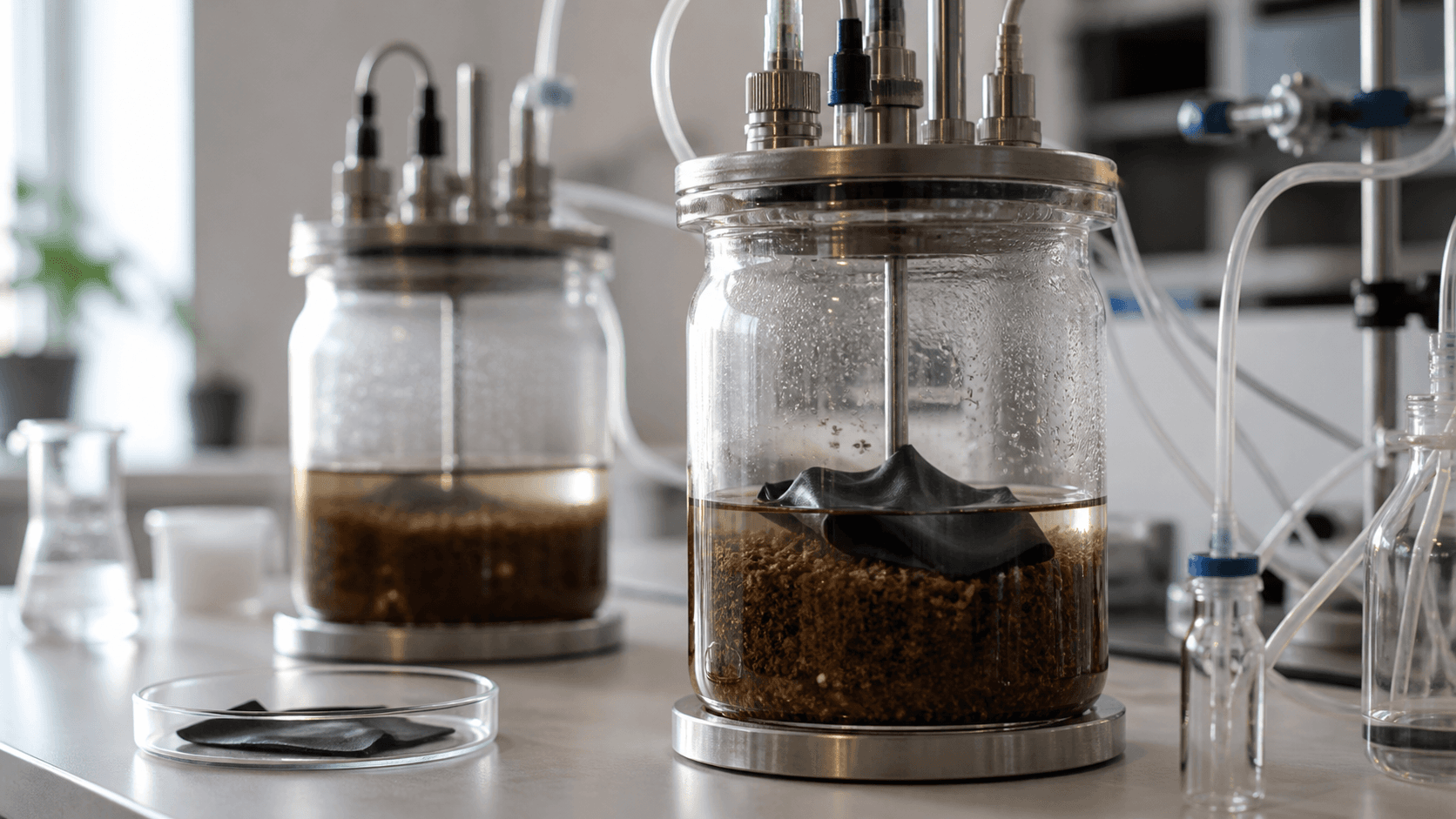
These are different claims with different test methods and end-of-life routes. A biodegradation result obtained under controlled laboratory conditions does not establish that a glove is recyclable, home compostable, industrially compostable or suitable for a particular landfill. It also does not cancel contamination controls.
Ask what was tested, for how long, under which method and conditions, and whether the result applies to the finished glove or only a material sample. Then check whether a real local treatment facility accepts that waste. If no compatible collection and treatment route exists, an end-of-life claim should not be used as a disposal instruction.
Procurement levers that survive scrutiny
A procurement specification can reduce waste without making claims that the product evidence cannot support. Start with use data and failure data, then change one controlled variable at a time.
- Right-use policy: define tasks that require gloves and tasks where hand hygiene or another control is appropriate.
- Fit and range: provide suitable sizes to reduce tearing, double gloving caused by poor fit and premature changes.
- Performance match: avoid both under-specifying and routinely buying more material or protection than the assessed task needs.
- Pack design: compare gloves per dispenser, board and film use, shipper density, damage rate and traceability needs.
- Forecasting: reduce expired or obsolete stock through better demand visibility and controlled product transitions.
- Supplier evidence: request product mass, packaging weights and test scope using consistent units and defined system boundaries.
Build a baseline before setting a target
Count gloves purchased, issued and discarded by site, task and product reference. Weigh representative waste streams rather than multiplying a catalogue weight across every size. Record contamination and rejected recycling loads as well as material collected.
- Pairs or gloves per activity, occupied bed day, batch, production hour or another meaningful denominator.
- Product mass by size and actual purchasing mix.
- Dispenser, inner, shipper and pallet packaging per delivered glove.
- Waste route and treatment outcome, separated into recycling, recovery and disposal.
- Tearing, leakage, incorrect use, expiry and stock-change losses.
- Safety, infection-control and user outcomes checked alongside environmental measures.
A practical next-step plan
Choose one site and one well-defined glove stream. Review whether gloves are needed, confirm the product specification, map contamination, obtain written collector acceptance and run a measured pilot. Keep the current safe disposal route in place until the alternative is verified.
Report prevention, collected mass, rejected material and final treatment separately. That gives procurement teams a more honest basis for decisions than a single recyclable claim on a tender response.